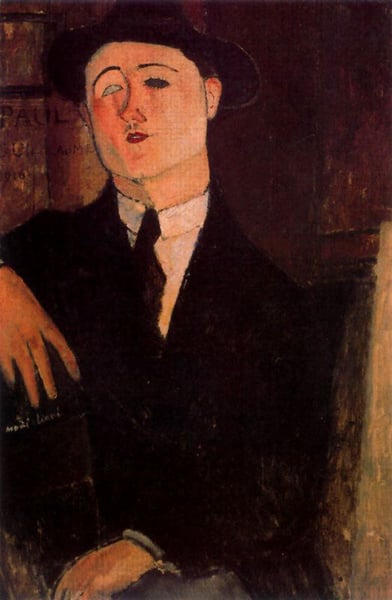
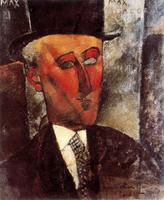
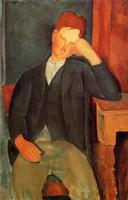
Analysis of "Portrait of Paul Guillaume" by Amedeo Modigliani
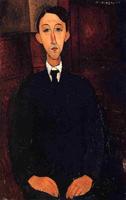
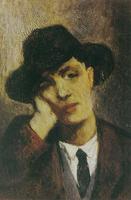
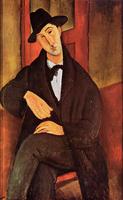
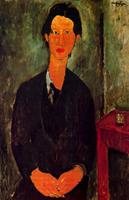
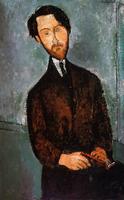
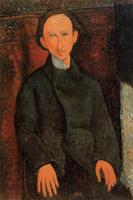
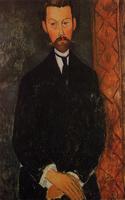
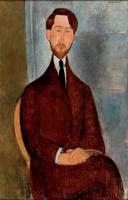
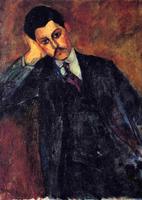
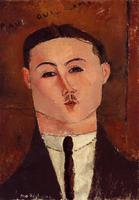
Within the framework of Expressionism, Modigliani’s portrait achieves significance by pushing the genre beyond mere likeness toward a powerful, subjective emotional statement. The painting exemplifies Expressionism’s core aim—to convey the artist’s inner response to the sitter rather than an objective record—through Modigliani’s signature elongated forms, simplified features, and intensely focused gaze. This work reimagines portraiture as a vehicle for psychological resonance, stripping away naturalistic detail to emphasize mood, character, and a haunting, lyrical tension. In the context of early 20th-century modernist portraiture, Modigliani’s piece stands out for its fusion of expressive distortion with a refined, almost sculptural sense of line, marking a distinct contribution to how Expressionist painters could transform the familiar genre of the portrait into a deeply personal and enduring artistic statement.