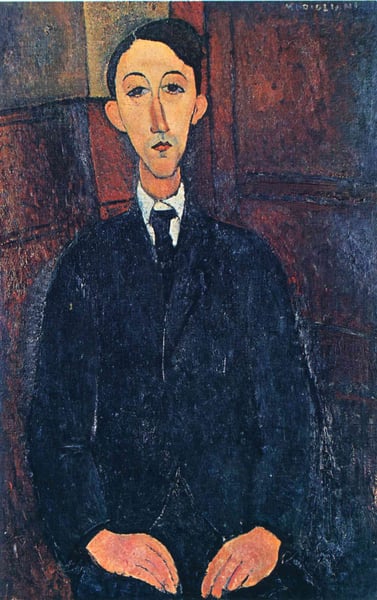
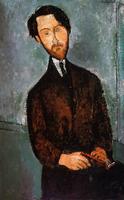
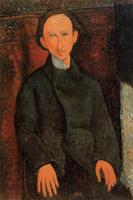
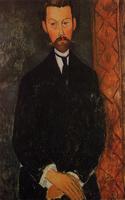
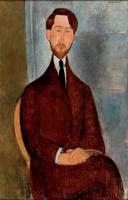
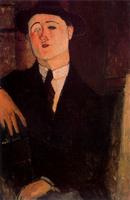
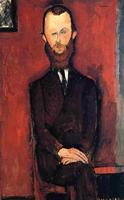
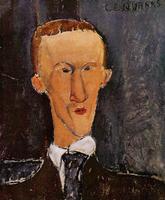
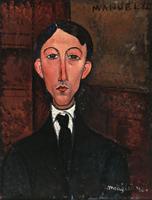
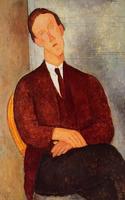
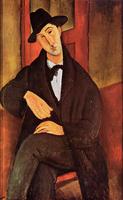
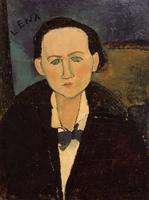
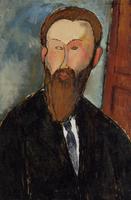
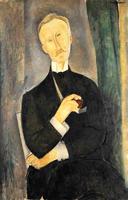
Analysis of "Portrait of the painter Manuel Humbert" by Amedeo Modigliani
Style & Genre: Expressionism / Portrait
Significance within the style and period:
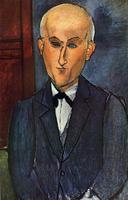
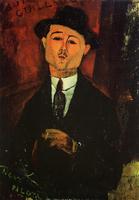
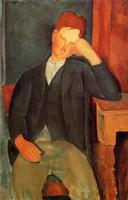
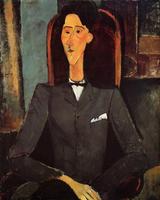
Modigliani’s portrait exemplifies the Expressionist desire to convey inner emotion over physical realism, yet it does so through a highly personal, lyrical language. The artist merges the elongated, mask-like faces and simplified features he derived from African and Cycladic sculpture with a subtle, melancholic introspection—turning the sitter into an archetype of the modern artist.
Unlike the raw, gestural distortions of German Expressionism, Modigliani’s version is refined and elegant, using a restricted palette (typically warm earth tones) and sinuous, rhythmic lines to create a sense of serene alienation. This work sits at the crossroads of Expressionist subjectivity and the formalist concerns of the School of Paris, demonstrating how portraiture could become a vehicle for both psychological depth and modernist abstraction.
The painting’s significance lies in its ability to capture the fragile humanity of the sitter—fellow painter Manuel Humbert—while stripping away anecdotal detail, leaving only a timeless, almost iconic presence. Modigliani’s portraits of artists and friends are among the most poignant examples of early 20th-century Expressionist portraiture, where the line between individual identity and universal emotion is deliberately blurred.