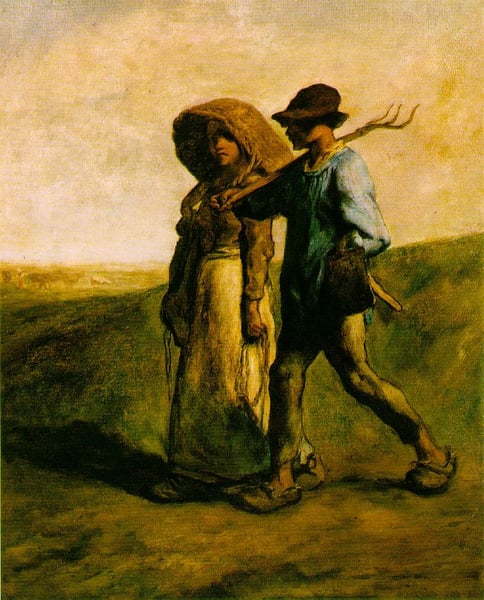
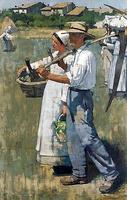
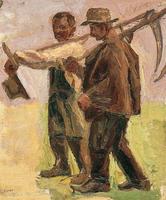
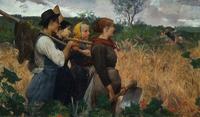
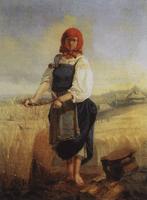
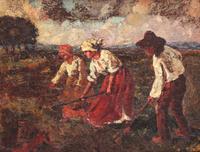
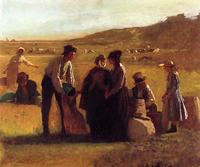
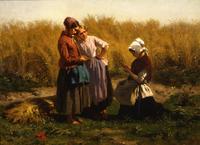
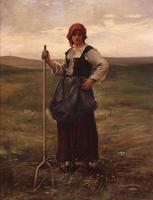
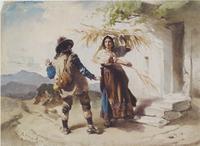
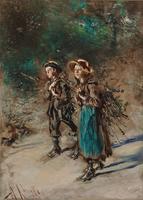
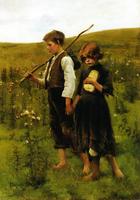
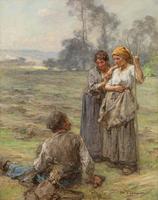
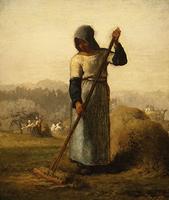
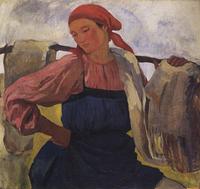
Jean-François Millet’s Going to Work is a quintessential example of Realist genre painting, significant for its dignified portrayal of peasant labor during a period when such subject matter was often romanticized or ignored. Working within the Realist movement, Millet rejected idealized historical or mythological scenes, instead turning his attention to the everyday rhythms of rural life. Here, the composition quietly emphasizes the solemnity and endurance of the figures—likely farmworkers heading to the fields—placing them at the center of the canvas without sentimentality. The work’s significance lies in how it elevates a mundane, labor-focused moment into a universal statement about human toil and resilience. By focusing on the physical weight of the workers’ bodies and their subdued, purposeful movement, Millet challenges the viewer to recognize the dignity inherent in manual labor, a theme that would influence later Social Realism and cement his role as a key chronicler of 19th-century peasant life.