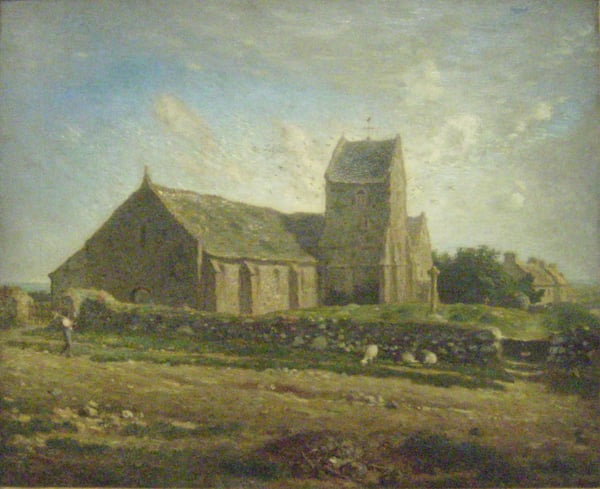
The Church of Greville
Expert analysis of Jean-Francois Millet’s The Church of Greville
Style: Realism · Genre: landscape
Expert Analysis: "The Church of Greville" by Jean-Francois Millet
Jean-Francois Millet’s The Church of Greville stands as a poignant example of Realist landscape painting—a genre that Millet helped elevate from mere topographical record to a vehicle for profound human and spiritual commentary. Executed within the Realist movement, the work rejects the idealized, heroic scenes of Romanticism or the polished pastorals of academic painting. Instead, Millet anchors the composition in the everyday, unembellished rural environment, focusing on the church as a humble, integral part of the landscape rather than as an architectural monument.
The significance of this piece lies in how Millet uses the landscape genre to explore the relationship between human life, faith, and the natural world. The church—a simple, unadorned structure—is not a symbol of triumphant religion but a quiet, enduring presence against the earth and sky. This aligns with Realism’s core mission: to depict ordinary subjects with truth and dignity, without idealization. By choosing a rural church in a landscape, Millet foregrounds the spiritual life of peasants as a natural, unpretentious aspect of their daily existence.
In style and composition, Millet’s treatment of light, atmosphere, and earthy palette reinforces a sense of solemnity and timelessness. The church becomes a focal point that anchors the viewer within the vast, quiet countryside—a hallmark of Millet’s ability to find profound significance in the modest, overlooked scenes of rural France. The Church of Greville is thus significant not for dramatic action or grandeur, but for its quiet, realist meditation on the integration of human structures into the eternal rhythms of nature, reflecting the dignity of everyday life that defines Millet’s legacy.
Museum / Gallery
Visually similar
20 works with related composition and palette
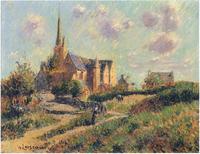
Notre Dame de la Clarte
Gustave Loiseau
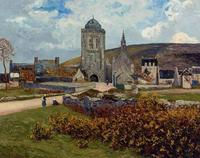
Breton Landscape
Maxime Maufra
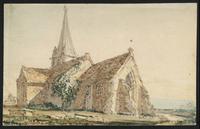
Kidwelly Church, Caermarthenshire
Thomas Girtin
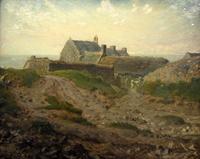
Priory at Vauville, Normandy
Jean-Francois Millet
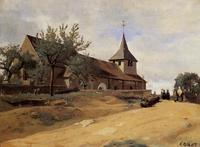
The Church at Lormes
Camille Corot
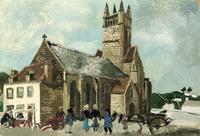
Church and Market, Brittany
Christopher Wood
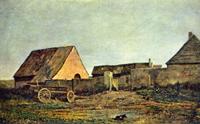
The peasant yard
Charles-Francois Daubigny
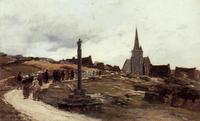
Procession near Ploumanach
Léon Augustin Lhermitte
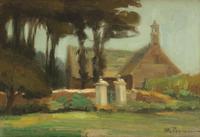
The Garden of Finistere Chapel
Stefan Popescu
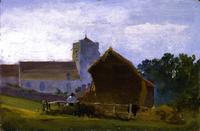
All Saints Church, Hastings
David Cox
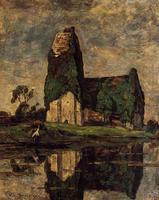
Criqueboeuf, the Church
Eugene Boudin
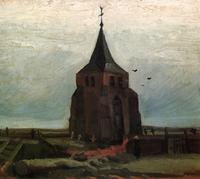
The Old Tower
Vincent van Gogh
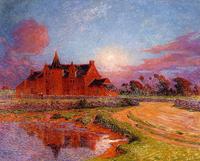
Moonlight over Kervaudu
Ferdinand du Puigaudeau
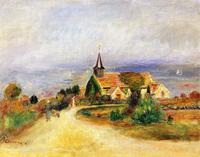
Village by the Sea
Pierre-Auguste Renoir
Eglise de Gouvernes, Automne
Léo Gausson
Kervaudu, View from the Marsh
Ferdinand du Puigaudeau
Bennecourt
Claude Monet
View of Bonnieres
Paul Cezanne
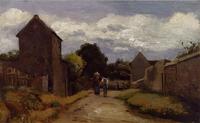
Male and Female Peasants on a Path Crossing the Countryside
Camille Pissarro
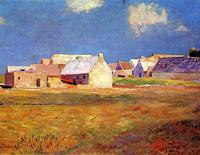
Breton Village
Odilon Redon