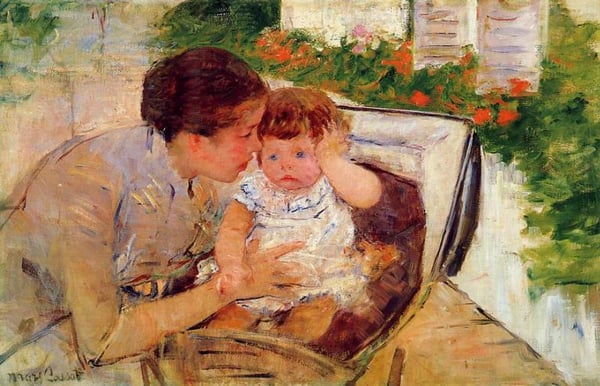
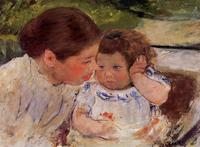
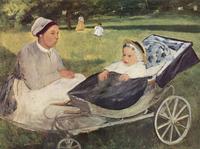
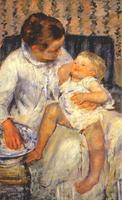
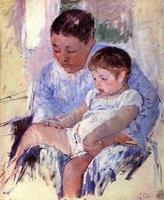
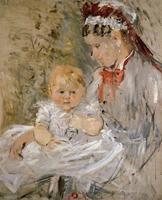
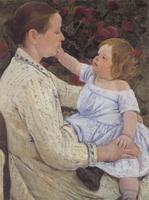
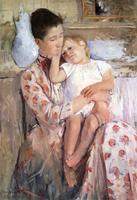
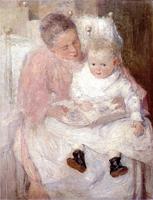
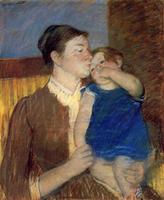
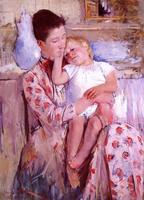
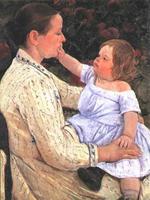
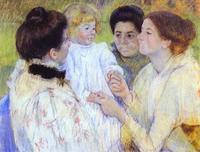
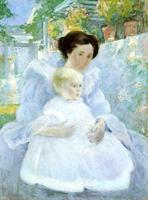
Mary Cassatt’s Susan Comforting the Baby (no.2) exemplifies the Impressionist goal of capturing fleeting, intimate moments of modern life while elevating the domestic sphere to fine art. As a genre painting, it focuses on a private, tender interaction between a woman (likely a nurse or family member) and an infant—a theme Cassatt returned to throughout her career, particularly after 1890. The significance of this work lies in its empathetic, unsentimental portrayal of caregiving, executed with the hallmark Impressionist techniques of loose brushwork, soft pastel or oil application, and a light, airy palette. Cassatt’s composition draws the viewer into the quiet rhythm of the scene: the gentle tilt of Susan’s head, the protective curve of her arm, and the baby’s trusting posture. Unlike many male contemporaries who depicted women as decorative objects, Cassatt—through her own experience as a woman and artist—grants her subjects dignity and psychological depth. The painting also reflects the influence of Japanese prints (as seen in the cropped, asymmetrical framing) and Degas’s compositional daring. In the context of Impressionism, Cassatt stands out for making the “private” public without losing its authenticity, and Susan Comforting the Baby is a quintessential example of how she transformed maternal care into a subject worthy of rigorous artistic investigation—a radical move in the late 19th century, when such scenes were often dismissed as sentimental or trivial.