Edgar Degas の Portrait of Henri Valpincon as a child with a governess の専門的な分析
スタイル:Impressionism · ジャンル:portrait
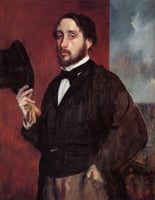
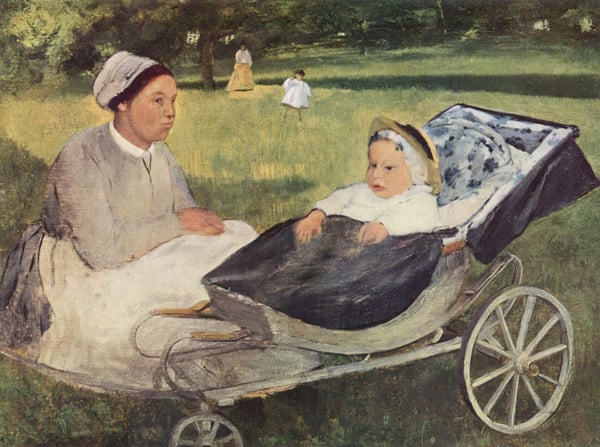
This portrait of Henri Valpinçon as a child with a governess is a compelling example of Edgar Degas’s distinctive approach to Impressionist portraiture. While Degas is often associated with ballet dancers and racetrack scenes, his portraits reveal a deep fascination with psychological nuance and the candid, unposed moments of everyday life.
Significance within Impressionism and the Portrait Genre:
-
Candid intimacy over formal grandeur: Unlike traditional commissioned portraits that emphasized status and stiff formality, Degas captures a quiet, private interaction between the child and his governess. The governess is not a mere prop but a real presence, suggesting a narrative of care and daily routine—a subject matter that aligns with Impressionism’s shift toward modern life.
-
Influence of photography and Japanese prints: Degas frequently employed unconventional cropping and asymmetrical composition, likely influenced by the snapshot aesthetic of early photography and Japanese ukiyo-e. In this work, the figures are likely placed off-center, with the space between them becoming an active element, inviting the viewer into the scene rather than keeping them at a distance.
-
Psychological depth and arrested motion: Degas’s portraits often feel like a frozen moment in time. The child’s expression and posture may convey a mix of shyness or boredom, while the governess’s attentive but slightly distant stance creates a tension between intimacy and formality. This ambiguity—what are they doing, thinking, feeling?—is a hallmark of Degas’s ability to suggest inner life without overt narrative.
-
Color and light as mood: True to Impressionist technique, Degas would use broken brushstrokes and subtle shifts in tone to model form and suggest atmosphere. The palette likely employs muted, earthier tones than his more colorful ballet scenes, focusing on the soft play of natural light on skin and fabric, which humanizes the subjects and grounds them in a specific time of day.
In sum, this portrait is significant because it exemplifies how Degas pushed the boundaries of portraiture—moving away from idealized representation toward a more honest, psychologically complex, and visually modern record of human relationships. It stands as a quiet masterpiece of the Impressionist exploration of everyday life.
視覚的に類似
構図やパレットが近い作品 20 件
Réunion De Famille Un Jour D'été À Saint-léon-sur-vézère
Paul Leroy
Children in a Garden
Mary Cassatt
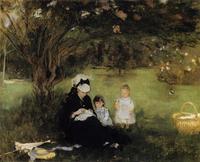
Beneath the Lilac at Maurecourt
Berthe Morisot
Artist's son
Mikhail Vrubel
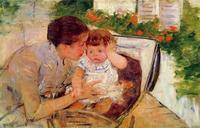
Susan Comforting the Baby (no.2)
Mary Cassatt
The cradle
Silvestro Lega
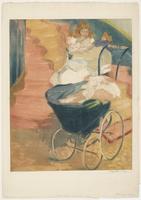
Little Girl on a Red Staircase
Jacques Villon
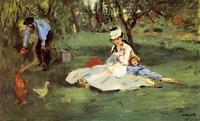
The Monet family in their garden at Argenteuil
Edouard Manet
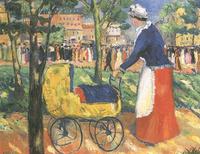
Boulevard
Kazimir Malevich
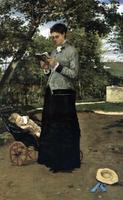
The sleep of innocence
Silvestro Lega
Family reunion in Bourron-Marlotte (Théodore de Banville in the forest of Fontainebleau)
Jules Breton
Family in the Orchard
Theo van Rysselberghe
Mother Playing with Her Child
Mary Cassatt
Camille Monet and Her Son Jean in the Garden at Argenteuil
Pierre-Auguste Renoir
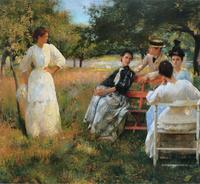
In the Orchard
Edmund Charles Tarbell
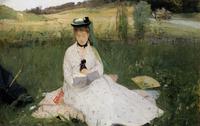
Reading with Green Umbrella
Berthe Morisot

The engaged couple
Silvestro Lega
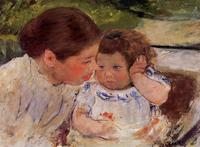
Susan Comforting the Baby (no.1)
Mary Cassatt
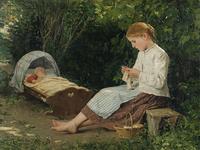
Knitting Girl Watching the Toddler in a Craddle
Albrecht Anker
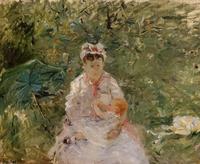
The Wet Nurse Angele Feeding Julie Manet
Berthe Morisot