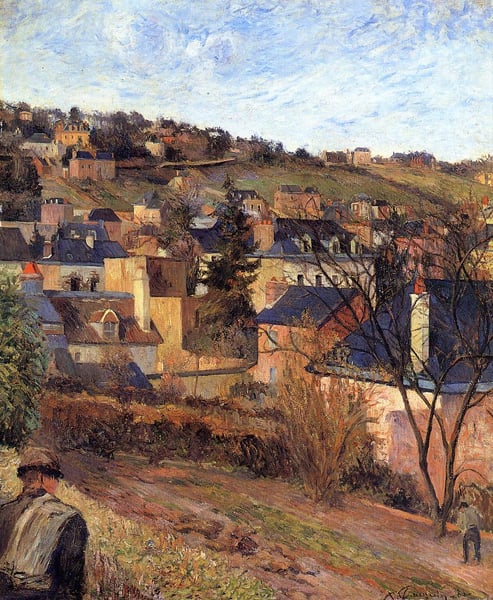
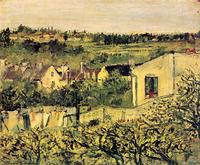
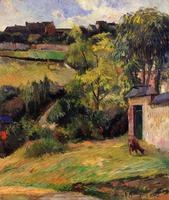
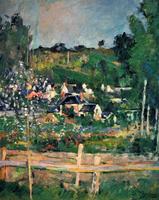
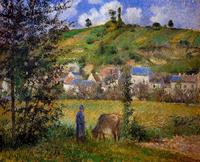
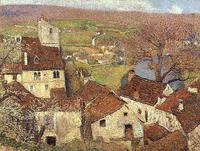
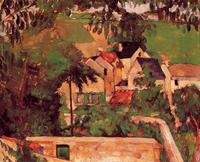
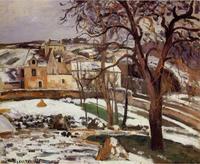
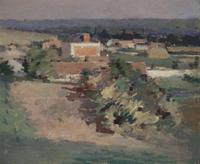
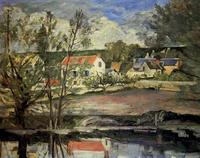
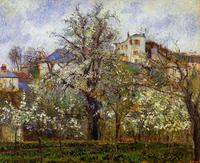
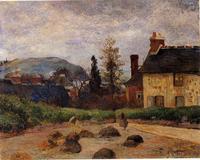
As an early work by Paul Gauguin, "Blue roofs of Rouen" belongs to his Impressionist period—a crucial stage before his later shift toward Symbolism and Primitivism. Painted as a cityscape, the artwork demonstrates Gauguin’s engagement with Impressionist principles, particularly the focus on capturing transient light and atmosphere through vivid, broken brushwork. The inclusion of "blue" in the title underscores the artist’s interest in chromatic experimentation, a hallmark of Impressionism. Within Gauguin’s own development, this piece shows him working within the movement’s conventions—urban perspective, plein-air immediacy, and the play of natural light on architectural forms—before he abandoned these for the more expressive, synthetic style of his post-Impressionist period. Its significance lies in documenting Gauguin’s early mastery of Impressionist technique while hinting at the bold color choices that would later define his mature work.