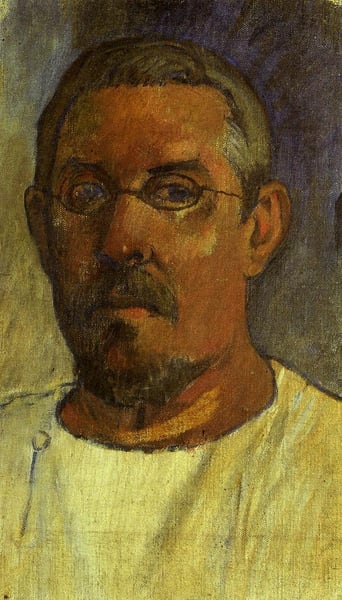
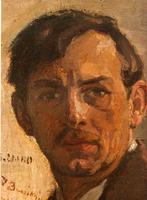
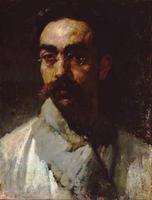
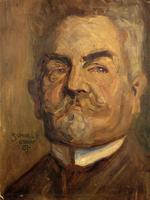
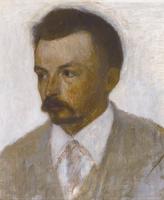
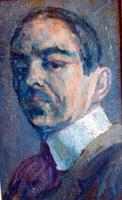
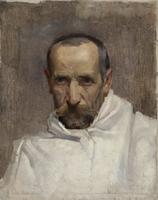
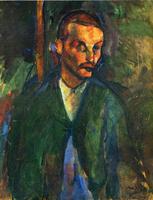
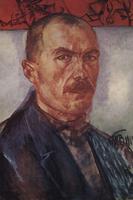
This self-portrait, executed during Gauguin’s second Tahitian period, is significant as a Post-Impressionist exploration of identity and dislocation. In the work, Gauguin presents himself with spectacles—a detail that underscores the tension between his European, intellectual background and the “primitive” Tahitian world he sought to inhabit. The self-portrait genre here becomes a tool for self-mythologizing, while the flat, non-naturalistic handling of space and color aligns with Post-Impressionism’s move toward symbolic representation over literal description. The spectacles act as a poignant marker of the artist’s own otherness, bridging his role as observer and participant—a duality that defines much of his late work.