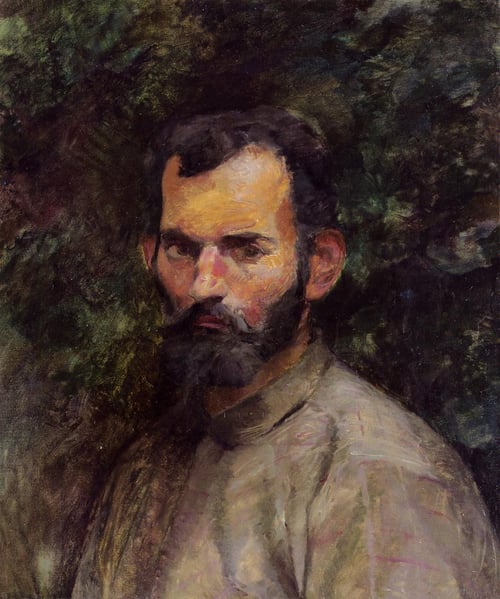
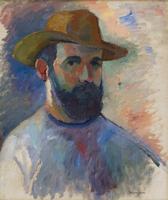
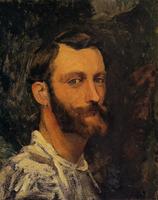
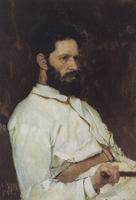
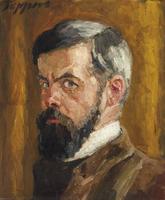
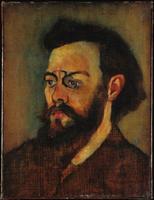
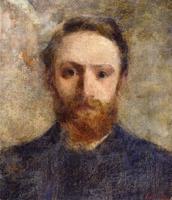
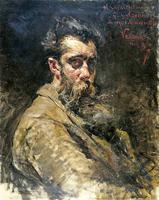
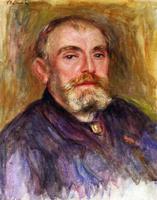
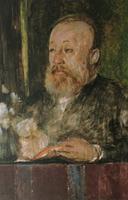
As a Post-Impressionist portrait, Henri de Toulouse-Lautrec's "Man's Head" is significant for its shift away from naturalistic representation toward psychological and expressive intensity. The work exemplifies the movement's hallmark emphasis on subjective interpretation—here, the artist's distinctive linework and compressed space prioritize the sitter's inner character over physical accuracy. Within Toulouse-Lautrec's broader oeuvre, this piece reflects his fascination with capturing the raw, often marginalized humanity of his subjects, a theme that aligns with Post-Impressionism's rejection of idealized, academic portraiture. The stark economy of form and the focus on a single, unadorned face underscore Lautrec's ability to distill a powerful emotional presence, marking the artwork as a testament to his role in advancing modern portraiture beyond mere likeness into a realm of emotional and social commentary.