The Seed of the Areoi
Details
Expert analysis of Paul Gauguin’s The Seed of the Areoi
Style: Post-Impressionism · Genre: nude painting (nu)
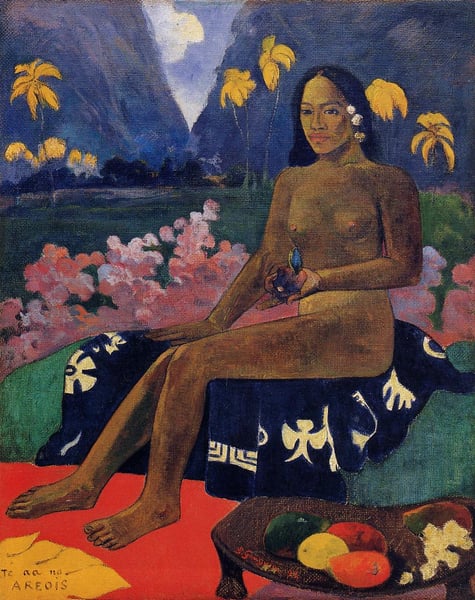
"The Seed of the Areoi" stands as a pivotal work from Paul Gauguin’s first Tahitian period (1891–1893), embodying his break from Western naturalism and his quest for a primal, spiritual essence in art. Painted in 1892, this Post-Impressionist nude (or nu) draws on the symbolism of the Areoi—a secret Tahitian society devoted to fertility and ritual—to explore themes of creation, desire, and cultural mystique.
The composition is deliberately flattened, with bold, non-naturalistic colors—vibrant reds, ochres, and deep greens—that reject traditional modeling and perspective. A young Tahitian woman reclines on a draped bed, her body simplified into broad, expressive planes. Behind her, a mysterious crouching figure emerges from a curtain, echoing the idea of a secret or sacred presence. Gauguin’s title, “The Seed,” implies both biological procreation and the propagation of the Areoi’s lore, blending Polynesian myth with his own symbolic vocabulary.
What makes this painting significant within Post-Impressionism is Gauguin’s radical departure from the observational fidelity of Impressionism. Instead, he constructs a dreamlike, synthetic reality where color and form convey emotional and spiritual meaning rather than visual accuracy. Influenced by Japanese prints, medieval stained glass, and Oceanic art, he rejects linear perspective and chiaroscuro, creating a timeless, ritualistic atmosphere.
As a key work from his first Tahiti period, “The Seed of the Areoi” encapsulates Gauguin’s “primitivist” ambitions: to find a purer, more authentic art beyond Western conventions. It remains a controversial yet essential example of how Post-Impressionism opened the door to Symbolism, Fauvism, and Expressionism, challenging the very definition of modern painting.
Museum / Gallery
Visually similar
20 works with related composition and palette
Her nami is Vairaumati
Paul Gauguin
Tahitian Woman
Paul Gauguin
Zwei in Dünen Sitzende Mädchen
Otto Mueller
Te Nave Nave Fenua (Delightful Land)
Paul Gauguin
The Invocation
Paul Gauguin
Sacred Spring
Paul Gauguin
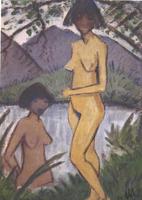
Bathing Girls Under Trees
Otto Mueller
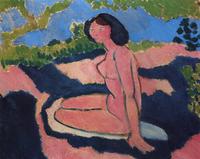
Pink Nude, or Seated Nude
Henri Matisse
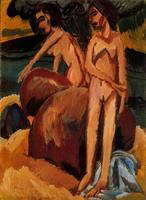
Bathers at Sea
Ernst Ludwig Kirchner
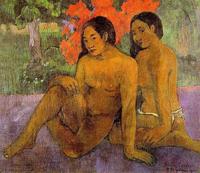
And the Gold of Their Bodies
Paul Gauguin
Olden times
Paul Gauguin
Zwei Akte Am See
Otto Mueller
Two women (Flowered hair)
Paul Gauguin
Delectable Waters
Paul Gauguin
Two Girls in Landscape
Otto Mueller
Are You Jealous?
Paul Gauguin
Where are you going?
Paul Gauguin
Arearea I
Paul Gauguin
Nude on the Parapet
Roman Selsky
Hina, Moon Goddess and Te Fatu, Earth Spirit
Paul Gauguin