
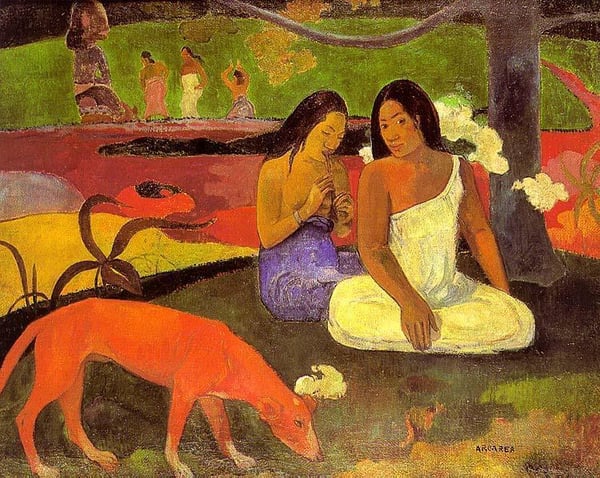
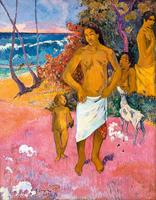
Arearea I
Подробности
Экспертный разбор работы «Arearea I» художника Paul Gauguin
Стиль: Post-Impressionism · Жанр: genre painting
Expert Analysis: Arearea I (1892) by Paul Gauguin
Significance within Post-Impressionism and the Tahiti Period
Paul Gauguin’s Arearea I (also known as Joyousness) stands as a pivotal work from his first sojourn in Tahiti (1891–1893), embodying the artist’s radical break from European naturalism. Painted in the Post-Impressionist idiom, it exemplifies Gauguin’s shift toward flattened pictorial space, non-naturalistic color, and symbolic subject matter—hallmarks that would profoundly influence the Symbolist and Primitivist movements.
Stylistic Innovations
-
Color as Emotion, Not Description: Gauguin abandons local color in favor of saturated, arbitrary hues—vivid oranges, deep reds, and tropical greens—that create a dreamlike, almost otherworldly atmosphere. The red dog in the foreground is a famous example of this deliberate distortion; it is not meant to be realistic but to evoke a sense of primitive vitality and mystical intensity.
-
Flattened Perspective and Cloisonnism: The composition collapses depth into bold, outlined planes of color, influenced by cloisonné enamel and Japanese prints. The two women in the foreground, the dog, the pool, and the background idol are all arranged in a decorative frieze, denying traditional linear perspective. This flattening asserts the painting’s identity as a constructed, symbolic image rather than a window onto reality.
-
Cultural Hybridity and the “Primitive” Ideal: Gauguin presents Tahitian women as serene, timeless figures engaged in restful, ritualistic activities. The idol in the background (possibly the Polynesian goddess Hina) anchors the scene in a world of myth and spirituality. The title Arearea (Joyousness) suggests a prelapsarian paradise, yet Gauguin’s Tahiti was a constructed fantasy—a rejection of industrialized Europe in favor of an imagined “primitive” authenticity.
Thematic Significance
Arearea I is central to Gauguin’s project of synthesizing observed reality with inner emotion. The work’s deliberate flattening and bold color would later directly inspire Fauvism (Matisse, Derain) and Expressionism. Moreover, it challenged Western viewers to reconsider the boundaries between “civilized” and “primitive” art, opening a path for modernist primitivism.
In summary, Arearea I is not merely a genre scene of Tahitian life; it is a manifesto of Post-Impressionist visual language—a painting where color, form, and subject conspire to create a transcendent, symbolic reality. Its legacy lies in its defiant departure from Western pictorial conventions and its enduring influence on the course of modern art.
Museum / Gallery
Визуально похожие
20 работ с близкой композицией и палитрой
Tahitian pastorale
Paul Gauguin
Sacred Spring
Paul Gauguin
Olden times
Paul Gauguin
Three Tahitian Women
Paul Gauguin
Maternity (Three Women on the Seashore)
Paul Gauguin
Her nami is Vairaumati
Paul Gauguin
Reclining Tahitian Women
Paul Gauguin
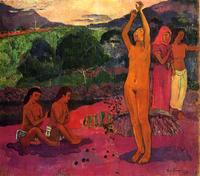
The Invocation
Paul Gauguin
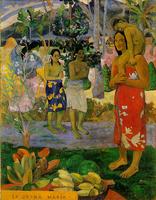
Ia Orana Maria (We Hail Thee Mary)
Paul Gauguin
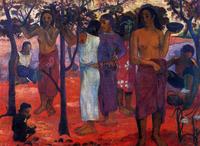
Perfect days
Paul Gauguin
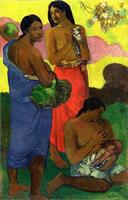
Maternite II
Paul Gauguin
Two tahitian women
Paul Gauguin
The Seed of the Areoi
Paul Gauguin
When Will You Marry?
Paul Gauguin
The Bathers
Paul Gauguin
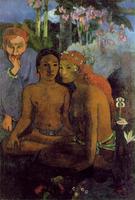
Barbarous Tales
Paul Gauguin
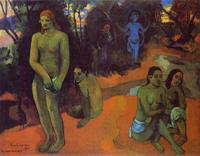
Delectable Waters
Paul Gauguin
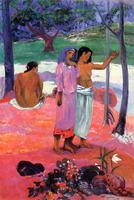
The Call
Paul Gauguin
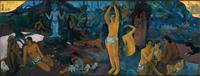
Where Do We Come From? What Are We? Where Are We Going?
Paul Gauguin
Bathers
Paul Gauguin