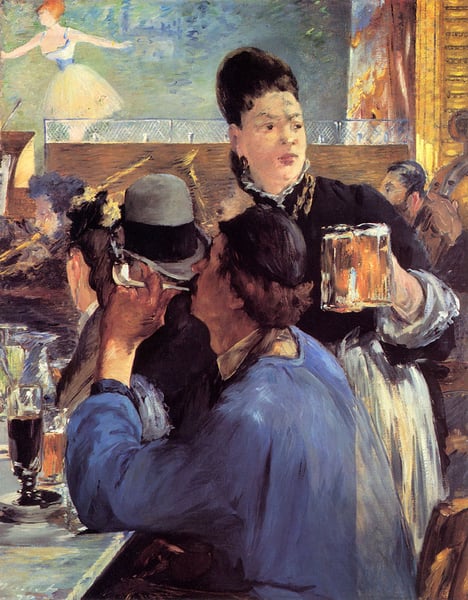
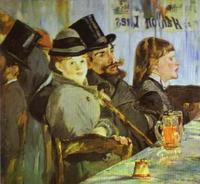
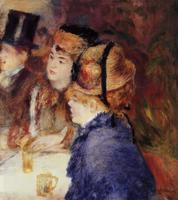
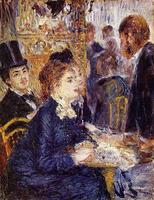
Analysis of "Corner of a Cafe-Concert" by Édouard Manet
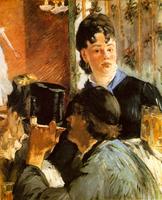
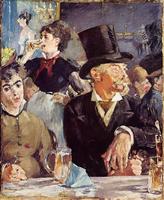
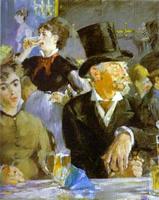
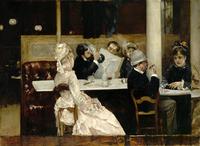
As a seminal work within the Impressionist movement, Manet’s Corner of a Cafe-Concert exemplifies the genre painting’s shift toward capturing the fleeting, modern life of Paris. The artwork is significant for its candid, snapshot-like composition, which reflects the Impressionist emphasis on spontaneity and everyday leisure. Manet’s treatment of the café-concert—a popular entertainment venue—highlights the era's social dynamics, isolating a corner view that suggests the casual, transient interactions of urban society. The loose brushwork and the play of light and shadow, characteristic of Impressionism, convey the atmosphere of the moment rather than meticulous detail, marking a departure from academic conventions. By focusing on a seemingly trivial corner of a café, Manet elevates a mundane slice of life to a subject worthy of fine art, reinforcing Impressionism’s revolutionary focus on contemporary experience and the perceptual immediacy of the modern world.