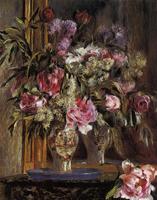
Analysis of "Peonies in a vase" by Édouard Manet
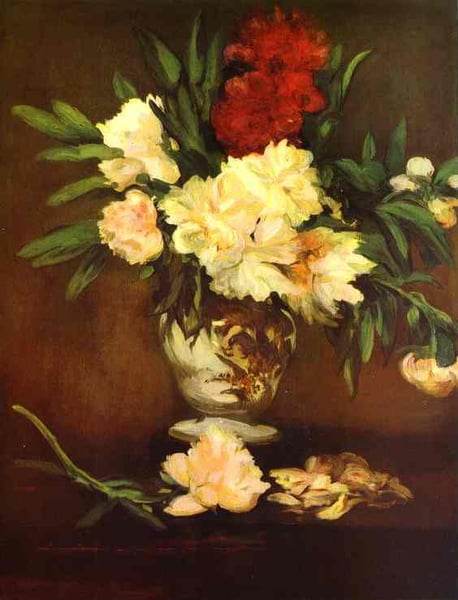
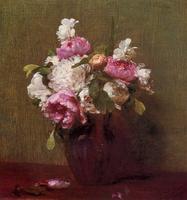
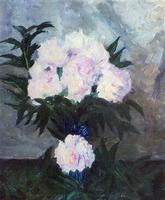
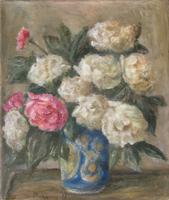
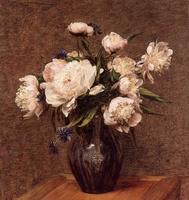
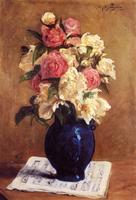
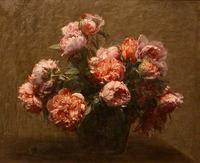
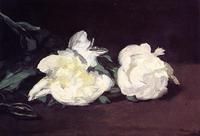
Manet’s Peonies in a vase is a still life executed within the framework of Realism, a movement that championed unidealized, everyday subjects and direct observation. In this work, Manet applies the core tenets of Realism to a humble floral arrangement: the peonies are rendered with candid immediacy, their petals and leaves depicted with loose, visible brushwork that captures the tactile presence of the blossoms rather than a polished, academic finish.
The painting’s significance lies in how it elevates a simple domestic subject—a vase of cut flowers—into a serious artistic statement. In doing so, Manet challenges the traditional hierarchy of genres, which placed history painting above still life. By treating peonies with the same vigorous, unflinching attention he gave to his portraits and scenes of modern life, he asserts that ordinary objects are worthy of the artist’s full engagement. This approach aligns with Realism’s ambition to depict the world as it is, without sentimentality or contrived beauty.
Within Manet’s own oeuvre, Peonies in a vase exemplifies his evolving technique—a blend of Realism’s truth-to-nature and a bold, painterly handling that would later influence Impressionism. The work stands as a testament to how Realist still life can transform the familiar into something quietly monumental.