
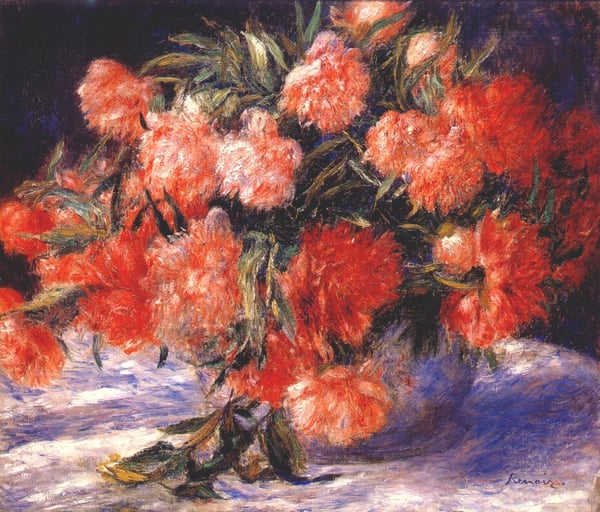
Pierre-Auguste Renoir の Peonies の専門的な分析
スタイル:Impressionism · ジャンル:flower painting
Expert Analysis of "Peonies" by Pierre-Auguste Renoir
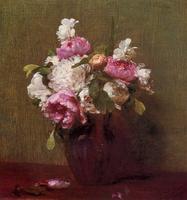
Renoir’s Peonies stands as a quintessential example of Impressionist flower painting, a genre through which the artist explored the movement’s core concerns: light, color, and fleeting natural beauty. Executed during his active years within the Impressionist circle, the work demonstrates Renoir’s signature approach—loose, feathery brushstrokes that dissolve form into vibrant patches of pigment, capturing the soft, lush texture of peony petals. The significance of this piece lies in its embodiment of Impressionism’s rejection of rigid academic still-life conventions. Rather than striving for botanical precision or symbolic allegory, Renoir prioritizes optical sensation: the way sunlight filters through the blooms, the shimmering interplay of pinks, whites, and greens, and the transient impression of a moment in a garden. This focus on ephemeral beauty and atmospheric effect—hallmarks of the Impressionist period—elevates a simple floral subject into a study of perception itself, reaffirming Renoir’s role in transforming still-life into a vehicle for modern sensory experience.
視覚的に類似
構図やパレットが近い作品 20 件
Peonies
Igor Grabar
Bouquet of flowers
Edouard Manet
Vase of Peonies on a Small Pedestal
Edouard Manet
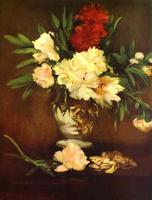
Peonies in a vase
Edouard Manet
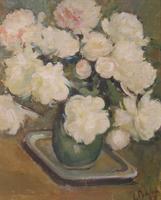
White Peonies in Green Vase
Corneliu Baba
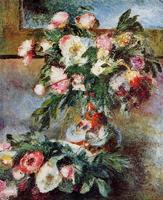
Peonies
Pierre-Auguste Renoir
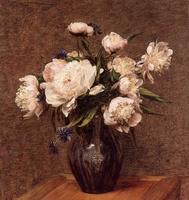
Bouquet of Peonies
Henri Fantin-Latour
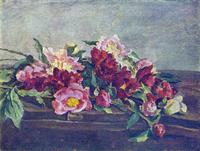
Still Life. Peonies on the table.
Pyotr Konchalovsky
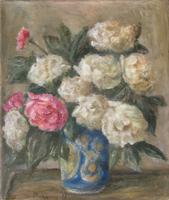
Białe Peonie
Józef Pankiewicz
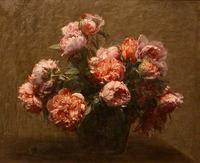
Vase of Peonies
Henri Fantin-Latour
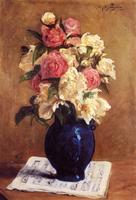
Bouquet of Peonies on a Musical Score
Paul Gauguin
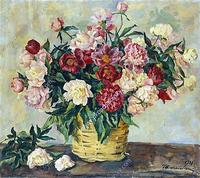
Still Life. Peonies in a basket.
Pyotr Konchalovsky
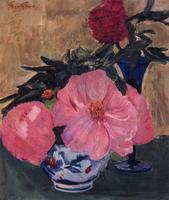
Still Life
Fujishima Takeji
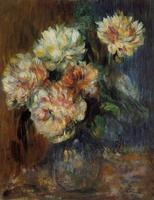
Vase of Peonies
Pierre-Auguste Renoir
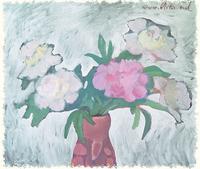
Bujori
Elena Bontea
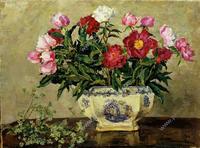
Still Life. Peonies in a porcelain vase.
Pyotr Konchalovsky
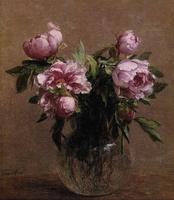
Vase of Peonies
Henri Fantin-Latour
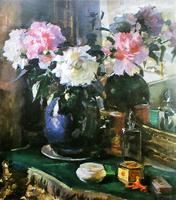
Still Life with Mirror
Victor Puzyrkov
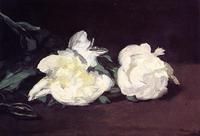
Branch of White Peonies and Secateurs
Edouard Manet
White Peonies and Roses, Narcissus
Henri Fantin-Latour