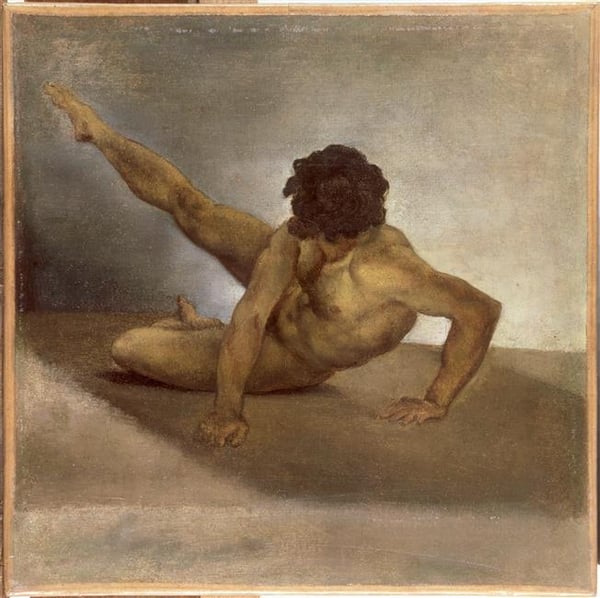
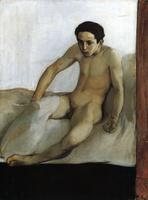
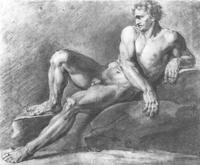
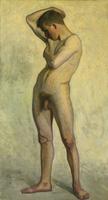
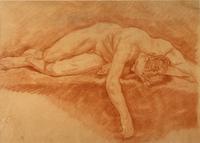
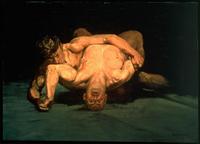
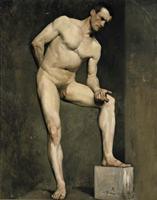
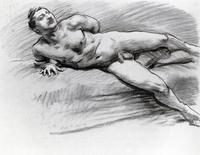
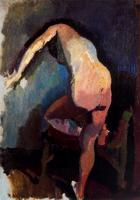
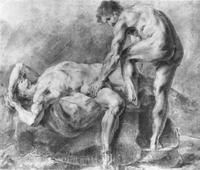
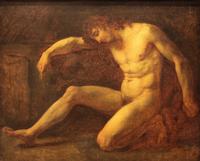
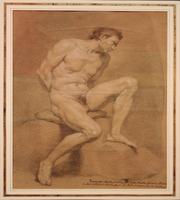
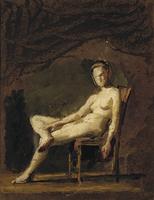
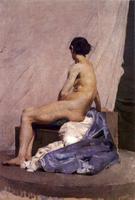
This work, Naked man reversed on the ground, stands as a compelling example of Romanticism’s break from classical idealization. Géricault’s nude is neither heroic nor perfectly proportioned; instead, it presents the human body in a raw, vulnerable state—likely a study of a corpse or a figure in extreme distress. The “reversed” pose, with the figure prone and foreshortened, emphasizes a dramatic, almost brutal realism. For Romanticism, this intensity of emotion and physical truth was paramount: the painting captures mortality and suffering without artifice. Within the genre of the nude, it moves beyond academic beauty to confront the viewer with the fragility of existence, a hallmark of Géricault’s fascination with the macabre and the sublime.