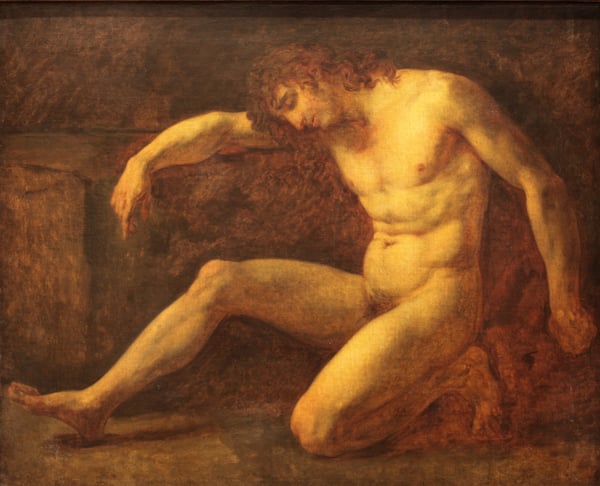
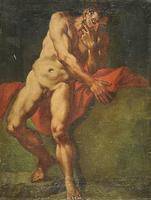
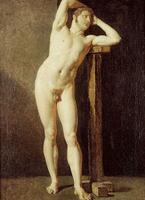
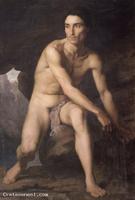
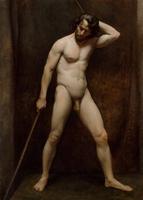
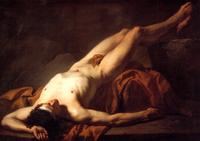
Based solely on the provided facts, the significance of "Death of Viala" by Pierre-Paul Prud'hon lies in its embodiment of Neoclassicism through the elevated genre of history painting.
As a history painting, the work is positioned within the highest hierarchy of artistic subjects—one that traditionally narrates a moral or exemplary event. In the Neoclassical style, such paintings are characterized by clarity, order, and a focus on civic virtue or heroic sacrifice. The title itself, "Death of Viala," suggests a scene of martyrdom or noble death, a recurring theme in Neoclassical art that seeks to instruct viewers through the portrayal of self-sacrifice for a greater cause.
Within this framework, Prud'hon's painting is significant because it applies Neoclassical principles—restrained composition, idealized forms, and a didactic narrative—to a contemporary subject (likely drawn from revolutionary history). This aligns with the Neoclassical impulse to draw parallels between ancient virtues and modern events, using the universal language of history painting to elevate a specific moment into a timeless lesson. The work thus reinforces the Neoclassical belief in art as a vehicle for moral and political edification.