Analisi esperta di First Cuckoo of the Year at Tsukudajima di Hiroshige
Stile: Ukiyo-e · Genere: landscape
Expert Analysis: First Cuckoo of the Year at Tsukudajima
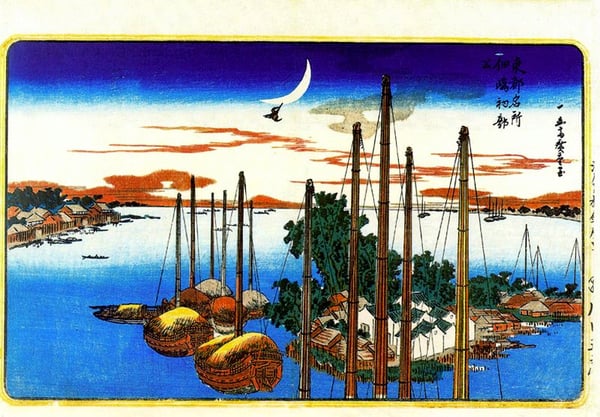
Hiroshige’s First Cuckoo of the Year at Tsukudajima stands as a masterful exemplar of ukiyo-e landscape printing, particularly notable within his celebrated series One Hundred Famous Views of Edo (1856–1858). The work’s significance lies in how it synthesizes Hiroshige’s signature atmospheric perspective with a subtle, seasonal narrative—a defining trait of the meisho-e (famous places) tradition.
Composition and Atmospheric Depth: The print captures a quiet, dawn-like scene on the island of Tsukudajima in Edo Bay. Hiroshige employs a low horizon line, with the distant silhouette of Mount Fuji faintly emerging through a soft, graded sky. The foreground is dominated by a calm water channel, where small fishing boats with masts like slender brushstrokes drift. The middle ground features rustic roofs and a grove of bare trees, their branches still wintry. The entire scene is veiled in a subtle, pale purple and grey haze—Hiroshige’s trademark device for conveying humidity, mist, or early morning light, here suggesting the lingering cool of late winter.
Symbolic and Seasonal Significance: The title announces the “first cuckoo,” a quintessential kigo (seasonal word) in Japanese poetry and art, signaling the transition from winter to spring. The cuckoo (hototogisu) is a bird of longing and poetic summons—often associated with the fleeting nature of beauty. By placing this tiny creature in the vast landscape, Hiroshige underscores the ukiyo-e philosophy of mono no aware (the poignant awareness of transience). The viewer is invited to listen, as if the cuckoo’s call has just broken the silence over the still bay.
Technical Mastery and Innovation: Hiroshige’s genius is evident in the color gradation (bokashi) that blends the sky from pale yellow at the horizon to a muted lavender above—a technique that simulates atmospheric perspective and defines the time of day. The deep indigo of the water and the warm ochre of the land create a harmonious contrast, while the absence of strong outlines in the distant hills and Fuji gives the scene a painterly, almost impressionistic quality. This approach was groundbreaking for ukiyo-e and later influenced Western artists like Van Gogh and Monet.
Cultural Context: Tsukudajima was known for its fishing community and, notably, as the origin of tsukudani (seafood simmered in soy sauce). By depicting this working-class locale as a site of poetic beauty, Hiroshige elevates the everyday landscape of Edo into a subject worthy of profound artistic contemplation. The print embodies the ukiyo-e principle of finding elegance in the fleeting, the ordinary, and the seasonal—a hallmark of Hiroshige’s lasting influence on both Japanese and global art.
Visivamente simili
20 opere con composizione e palette affini
Hayama, Iyo
Hasui Kawase
4. Tsukudajima and Eitai Bridge
Hiroshige
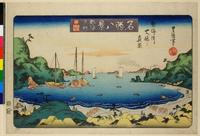
View of Oshima from Atami beach
Utagawa Toyokuni II
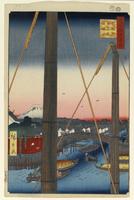
77 Inari Bridge and the Minato Shrine in Teppōzu
Hiroshige
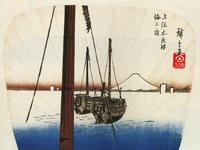
Mount Fuji seen across the water
Hiroshige
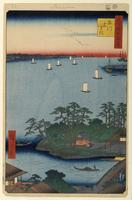
83. Shinagawa Susaki
Hiroshige
Sailing boat
Utagawa Kuniyoshi
Descending Geese, Katata
Hiroshige
A shrine among trees on a moor
Hiroshige
108. View of Shiba Coast
Hiroshige
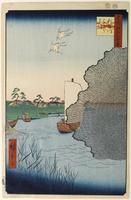
71 (61) Scattered Pines on the Tone River
Hiroshige
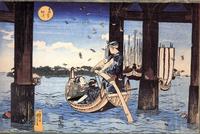
Ferryman
Utagawa Kuniyoshi
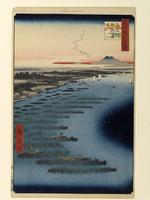
109. Minami Shinagawa and Samezu Coast
Hiroshige
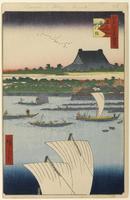
78 Teppōzu and Tsukiji Monzeki Temple
Hiroshige
Returning Sails at Shiba Bay
Keisai Eisen
93. Niijuku Ferry
Hiroshige
55 (50) The Sumiyoshi Festival at Tsukudajima
Hiroshige
Tsukada Island in the Musashi province
Katsushika Hokusai
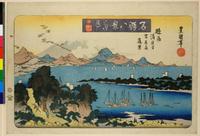
Wild geese at Miho, Kiyomi Temple, Suruga, Yoshiwara
Utagawa Toyokuni II
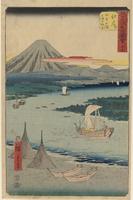
Folio From the Upright Gojusan Tsuji Tokaido
Hiroshige