
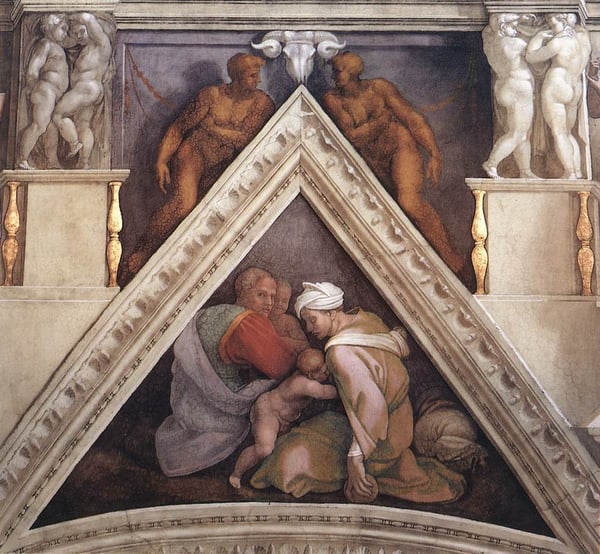
Expert analysis of Michelangelo’s The Ancestors of Christ: Ozias
Style: High Renaissance · Genre: religious painting
Expert Analysis: "The Ancestors of Christ: Ozias" by Michelangelo
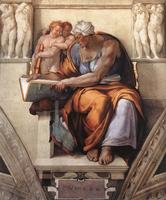
As a High Renaissance religious painting, The Ancestors of Christ: Ozias is a masterful example of Michelangelo’s ability to fuse monumental humanism with sacred narrative. Created as part of the series of lunettes and spandrels on the Sistine Chapel ceiling, this work is significant for its role in visually articulating the genealogy of Christ—a theological link between the Old and New Testaments that underscores the divine plan of salvation.
Stylistic Significance within the High Renaissance
Michelangelo’s treatment of the figure of Ozias embodies the High Renaissance ideals of idealized proportions, anatomical precision, and psychological depth. The figure is rendered with a sculptural solidity, typical of the artist’s approach, even in a fresco context. The composition emphasizes clarity and balance: Ozias is often shown in a contemplative pose, his body twisted slightly to create a dynamic yet harmonious silhouette. This contrapposto-like engagement echoes classical sculpture, while the rich, earthy palette of the fresco—ochres, umbers, deep blues—demonstrates Michelangelo’s sophisticated handling of color to model form and convey a quiet, meditative atmosphere.
Iconographic and Theological Importance
Within the broader Sistine Chapel program, the ancestors of Christ are not merely decorative; they are integral to the narrative of human fallibility and divine promise. Ozias (Uzziah in the Bible) was a king of Judah, and his inclusion in the genealogy (Matthew 1:8–9) places Christ within a lineage of both righteousness and imperfection. Michelangelo transforms these often-overlooked figures into deeply human presences, imbuing them with a sense of weary nobility. The lunette format allowed him to explore new pictorial challenges—such as foreshortening and the illusion of shallow space—that pushed the limits of fresco technique and contributed to the expressive power of the ceiling as a whole.
Why This Work Matters
The Ancestors of Christ: Ozias stands as a testament to Michelangelo’s innovative synthesis of religious doctrine and artistic virtuosity. Unlike the more famous scenes from Genesis on the ceiling, these familial portraits ground the epic narrative in specific, relatable humanity. They remind viewers that the path to redemption runs through real, flawed individuals—a theme that resonates with the humanist spirit of the High Renaissance. Michelangelo’s ability to elevate a genealogical detail into a timeless image of introspection and spiritual waiting marks this work as a critical piece in the chapel’s unified theological message.
Museum / Gallery
Visually similar
20 works with related composition and palette
The Ancestors of Christ: Zerubbabel
Michelangelo
The Ancestors of Christ: Salmon
Michelangelo
The Ancestors of Christ: Hezekiah
Michelangelo
The Ancestors of Christ: Asa
Michelangelo
The Ancestors of Christ: Jesse
Michelangelo
Sistine Chapel Ceiling: The Prophet Joel
Michelangelo
The Prophet Ezekiel
Michelangelo
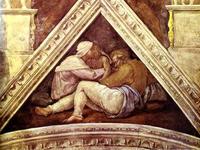
The Ancestors of Christ: Josias
Michelangelo
Sistine Chapel Ceiling: The Persian Sibyl
Michelangelo
Frescoes above the altwall
Michelangelo
Sistine Chapel Ceiling: Libyan Sibyl
Michelangelo
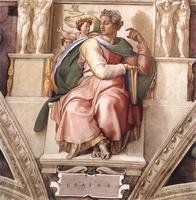
The Prophet Isaiah
Michelangelo
Frescoes above the entrance wall
Michelangelo
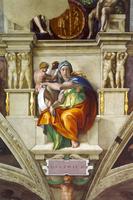
Sistine Chapel Ceiling: The Delphic Sibyl
Michelangelo
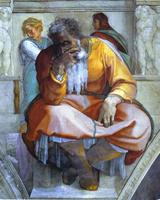
The Prophet Jeremiah
Michelangelo
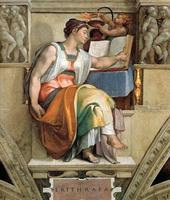
Ceiling Of The Sistine Chapel. Sybils Erithraea
Michelangelo
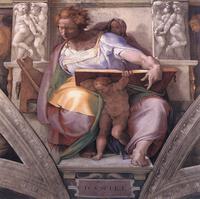
The Prophet Daniel
Michelangelo
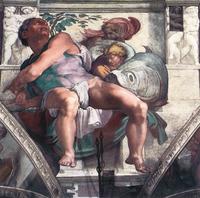
The Prophet Jonah
Michelangelo
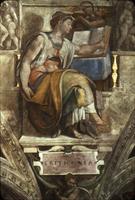
Sistine Chapel Ceiling: Sibyl Erithraea
Michelangelo
Sistine Chapel Ceiling: Cumaean Sibyl
Michelangelo