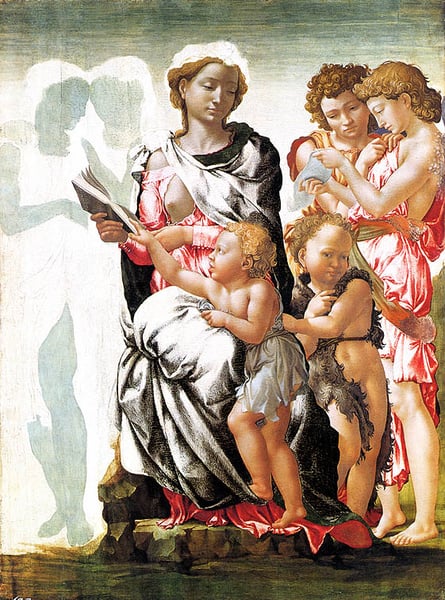
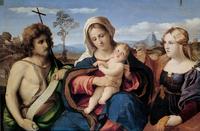
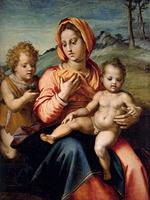
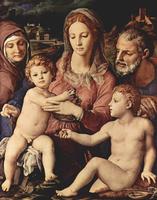
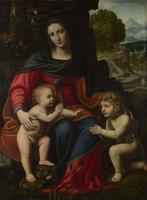
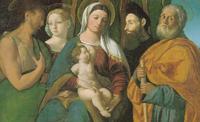
Expert Analysis of "The Virgin and Child with Saint John and Angels (Manchester Madonna)" by Michelangelo
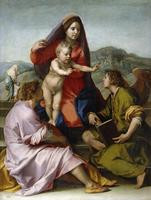
As a High Renaissance religious painting, this work by Michelangelo embodies the period’s core values: idealized human form, balanced composition, and profound spiritual gravity. The very presence of Michelangelo—a titan of the High Renaissance—lends the piece immense significance. While many artists of the era depicted similar sacred subjects, Michelangelo’s treatment elevates it through his signature sculptural approach to painting, emphasizing volume and anatomical precision even within a devotional scene. The inclusion of Saint John and angels alongside the Virgin and Child not only reinforces the theological narrative but also demonstrates the High Renaissance preference for harmonious multi-figure groupings that feel both natural and divinely ordered. This painting stands as an early example of Michelangelo’s mastery of sfumato and chiaroscuro, techniques that would define the period’s illusionistic depth. Its significance lies in how it condenses the grand ambitions of the High Renaissance—human dignity, spiritual transcendence, and formal perfection—into a intimate, tender moment of Christian iconography.