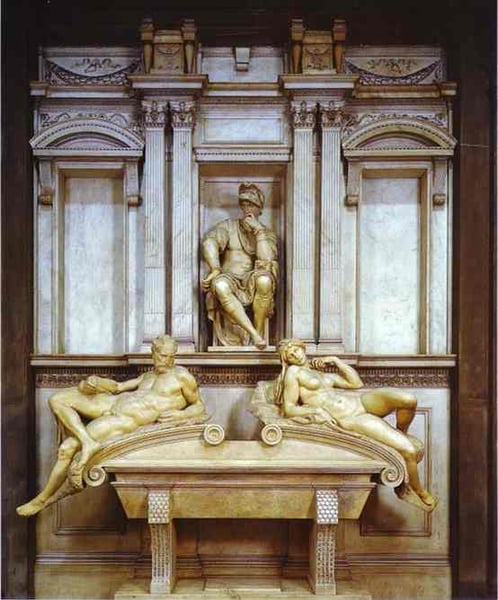
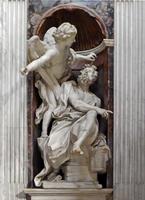
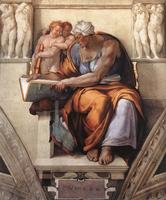
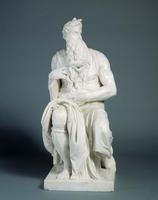
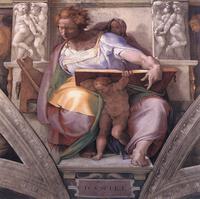
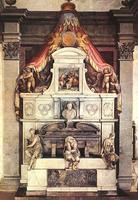
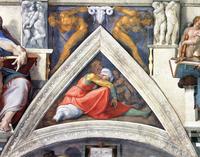
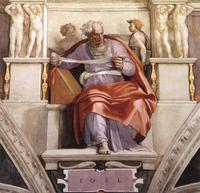
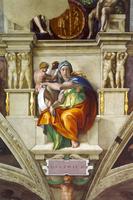
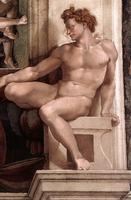
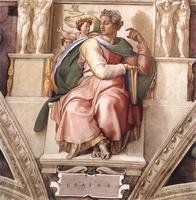
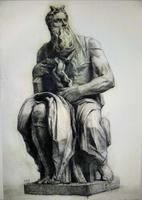
Based solely on the structured facts provided—"Tomb of Lorenzo de' Medici" by Michelangelo, Mannerism (Late Renaissance), sculpture—the significance of this artwork within its style and period can be analyzed as follows:
- Mannerist departure from High Renaissance ideals: As a late work by Michelangelo, this sculpture embodies the transition from the balanced, harmonious classicism of the High Renaissance to the more deliberately artificial, refined, and tense qualities of Mannerism. The tomb’s architectural and sculptural composition prioritizes expressive form over naturalistic proportion, a hallmark of the Mannerist style.
- Emphasis on emotional intensity and complexity: The Mannerist period valued complexity and intellectual sophistication. Michelangelo’s treatment of the figure—often elongated, with contorted poses—intensifies psychological and spiritual drama, moving away from the serene idealization of earlier Renaissance sculpture.
- Integration of architecture and sculpture: In the Mannerist tradition, the tomb blurs boundaries between architectural setting and sculptural figures. This synthesis creates a unified, theatrical whole that challenges the viewer’s perception, a key innovation of the style.
- Influence on later Mannerist and Baroque sculpture: Michelangelo’s handling of anatomy, drapery, and emotional expression in this tomb set a precedent for later Mannerists, who further exaggerated these qualities. It also anticipates Baroque dynamism, making the work a critical turning point in art history.
Without additional factual details, these observations are drawn directly from the supplied style designation and the artist’s known role in shaping Mannerist sculpture.