Expertenanalyse zu Francisco Goyas The lineage
Stil: Romanticism · Genre: caricature
Expert Analysis of "The Lineage" by Francisco Goya
Style: Romanticism | Genre: Caricature
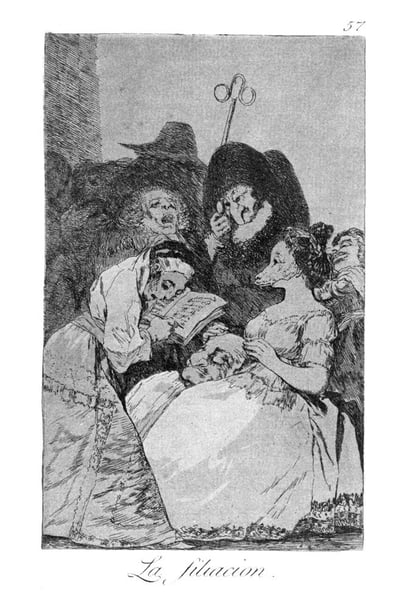
Francisco Goya’s "The Lineage" stands as a remarkable fusion of Romanticism’s emotional intensity with the biting social commentary inherent in caricature. Created during a period when Goya was increasingly disillusioned with Spanish society, this work exemplifies how Romantic artists leveraged exaggeration and grotesque humor to critique power, heredity, and human folly.
Significance within Romanticism
Romanticism prized individual vision, raw emotion, and a rejection of neoclassical restraint. Goya’s caricatures—often dismissed as mere satire—are in fact profound expressions of Romantic subjectivism. "The Lineage" likely distorts aristocratic or royal lineage into absurd, animalistic or monstrous forms, using distortion not for mere comedy but to lay bare the moral decay behind inherited privilege. This aligns with Romanticism’s fascination with the dark, irrational, and grotesque—a turn away from idealized beauty toward psychological and social truth.
Significance as Caricature
In the Romantic era, caricature became a powerful weapon for political and moral dissent. Goya, following the tradition of his Los Caprichos series, elevated caricature from lowbrow entertainment to high art. "The Lineage" would employ exaggerated features—elongated noses, bulging eyes, misshapen bodies—to visually “deform” the concept of noble bloodline, suggesting that what society calls “breeding” is actually a mask for corruption. This subversive technique anticipates modern political cartooning and positions Goya as a pioneer of visual critique.
Broader Artistic Impact
Goya’s caricatures influenced later Romantics like Honoré Daumier and even the Expressionists of the 20th century. "The Lineage" matters because it demonstrates how a Romantic artist could use a popular, accessible genre to challenge authority, explore human irrationality, and affirm the artist’s moral autonomy. It is a testament to Goya’s belief that art must speak truth, however ugly or unsettling.
In sum, "The Lineage" is significant as a Romantic-era caricature that weaponizes exaggeration to expose societal hypocrisy, merging formal innovation with fierce commentary—a hallmark of Goya’s enduring legacy.
Visuell ähnlich
20 Werke mit ähnlicher Komposition und Farbpalette
It is better to be idle
Francisco Goya
Don Quixote
Gustave Dore
Perrault
Gustave Dore
TOUT VIENT À QUI SAIT ATTENDRE
John Leech
Don't scream, silly
Francisco Goya
They say 'yes' and give their hand to the first comer
Francisco Goya
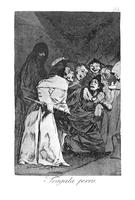
Swallow it, dog
Francisco Goya
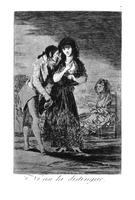
Even so he cannot make her out
Francisco Goya
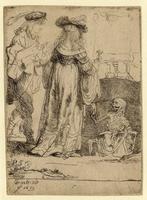
Death appearing to a wedded couple from an open grave
Rembrandt
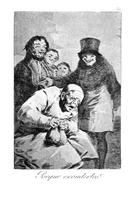
Why hide them?
Francisco Goya
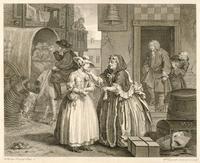
A Harlot's Progress, plate 1
William Hogarth
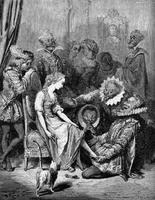
He Perceived That Her Little Foot Slid In Without Trouble
Gustave Dore
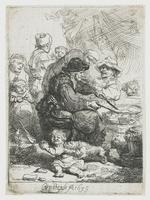
The pancake woman
Rembrandt
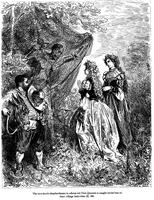
Don Quixote
Gustave Dore
The Angel Departing from the Family of Tobias
Rembrandt
Nobody knows anybody
Francisco Goya
They already go plucked
Francisco Goya
Illustration for The Girl
Gustave Dore
Nuccia accepts Meo Patacca for her husband (Plate 52/52)
Bartolomeo Pinelli
Birds of a Feather
Francisco Goya