Expertenanalyse zu Giorgio de Chiricos Dying Centaur
Stil: Neo-baroque · Genre: mythological painting
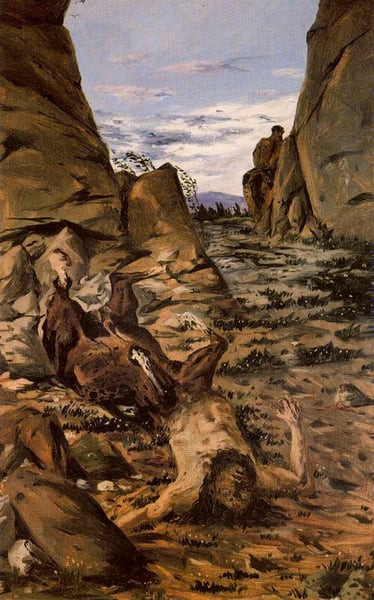
The "Dying Centaur" by Giorgio de Chirico is a striking example of Neo-baroque sensibilities applied to a mythological painting. Its significance lies in how de Chirico—best known for his enigmatic Metaphysical works—here harnesses the dramatic energy, emotional intensity, and dynamic composition typical of Baroque art to reinterpret a classical myth.
In this piece, the mythological subject of the centaur, a hybrid creature from Greek lore, is treated not as a static allegory but as a moment of poignant, theatrical struggle. The Neo-baroque style heightens the narrative through exaggerated movement, chiaroscuro (implied by the dramatic contrast of light and shadow), and a sense of immediate, visceral emotion. The centaur’s dying pose likely echoes the spiraling, torsion-filled figures of Baroque masters like Bernini or Rubens, investing the ancient myth with a contemporary, almost cinematic urgency.
What makes the work significant within its style/period is de Chirico’s deliberate synthesis of Baroque drama with mythological tradition—a fusion that distances it from his own earlier, more cerebral Metaphysical phase. By embracing Neo-baroque, he reasserts the power of raw emotion and physicality in art, proving that myth can be revived through a modern, dynamic lens. This painting stands as a testament to de Chirico’s stylistic range and his ability to infuse a timeless subject with the tempestuous, life-and-death gravity that defines Baroque art.
Visuell ähnlich
20 Werke mit ähnlicher Komposition und Farbpalette
A Centaur Playing with His Son
Otto Bache
Ovid among the Scythians
Eugene Delacroix
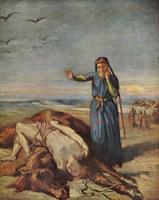
Cossack girl at Mazeppa 's body
Theodore Chasseriau
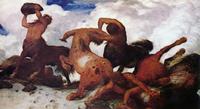
Battle of the Centaurs
Arnold Böcklin
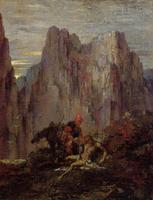
The Good Samaritan
Gustave Moreau
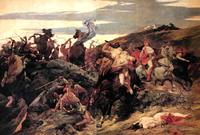
Pentesilea
Arturo Michelena
Hagar in the Wilderness
Camille Corot
A Cavern near Saint Agnese without the Porta Pia
Thomas Jones
Pescadores del río
Juan Carlos Castagnino
And the Sky was Full of Forms
William Holbrook Beard
São Marcos Evangelista
Nicolas Antoine Taunay
Pan frightening a shepherd
Arnold Böcklin
Three Faun with Cow and Calf
Rudolf Koller
4 in the Forest of Fontainebleau
Richard Parkes Bonington
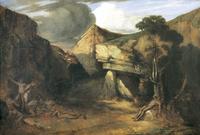
Scene of Cannibals
Ignacio Merino
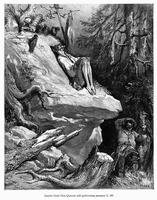
Don Quixote
Gustave Dore
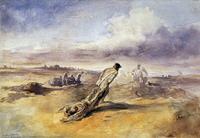
Funeral of fallen
August von Pettenkofen
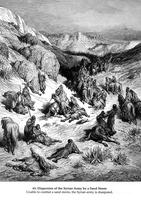
Dispersion of the Syrian Army by a Sand Storm
Gustave Dore
Pan whistling at a blackbird
Arnold Böcklin
Don Quixote and Sancho Panza in the Mountains
Honore Daumier