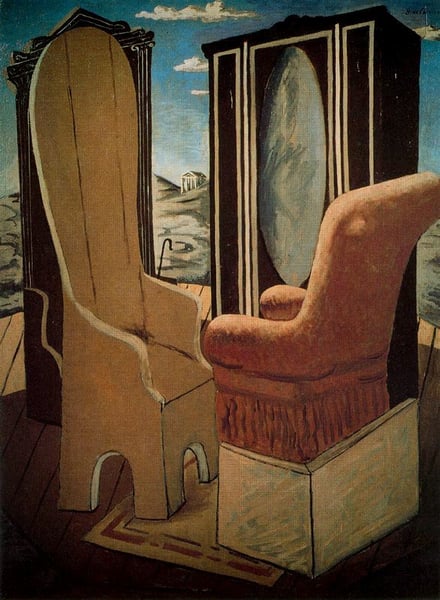
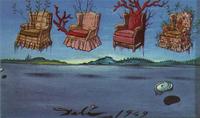
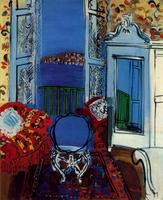
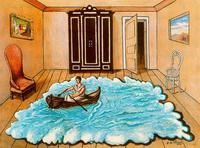
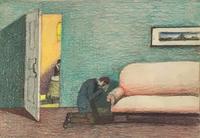
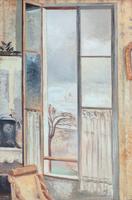
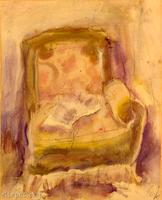
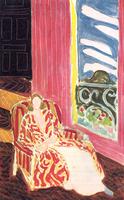
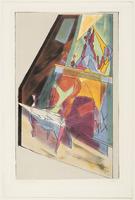
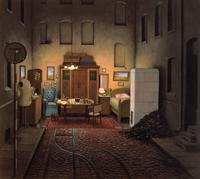
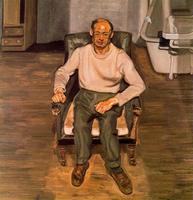
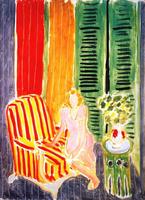
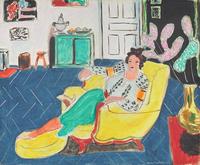
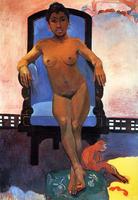
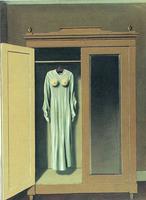
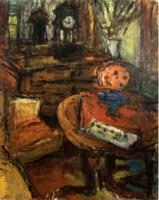
In Giorgio de Chirico's Furniture in the Valley, the artist achieves one of metaphysical art’s most potent effects: the deliberate confusion of interior and exterior space. Though classified as an interior scene, the title places domestic objects – presumably chairs, tables, or cabinets – within a valley, a landscape typically associated with nature and vastness. This contradiction is the work’s central significance.
Executed during de Chirico’s foundational metaphysical period (circa 1910s–1920s), the painting exemplifies the movement’s desire to strip objects of their everyday function and place them in uncanny, often illogical settings. By isolating furniture in an open valley, de Chirico alienates the familiar, transforming utilitarian forms into enigmatic presences. The resulting stillness – a hallmark of his style – invites the viewer to question the boundary between reality and dream. The work also plays with scale: a valley implies horizon and depth, yet interior furniture forces a claustrophobic, stage-like perspective. This tension creates a philosophical pause, a moment where the ordinary becomes strange, and space itself feels unstable.
Furniture in the Valley is significant because it pushes the metaphysical genre beyond its typical motifs (mannequins, empty arcades, classical statues) and into a more conceptual territory: the inversion of genre itself. By labeling an interior within a landscape, de Chirico challenges the very categories we use to interpret art, making the work a key statement on the disquieting power of misplaced objects.