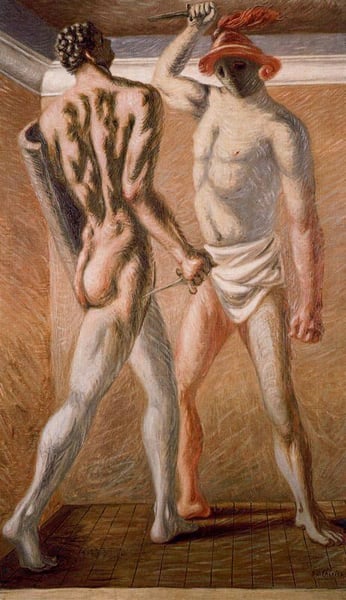
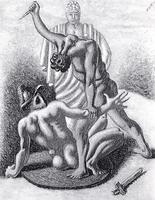
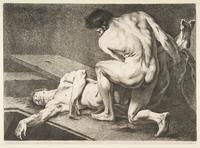
In Giorgio de Chirico’s Gladiators, the artist works within the Neo-baroque style to create an allegorical painting that is significant for its fusion of classical combat imagery with the theatrical, dynamic energy typical of Baroque art. The work stands out as a later, more dramatic turn in de Chirico’s career—departing from the eerie stillness of his earlier Metaphysical period—and instead embraces sweeping movement, rich chiaroscuro, and a heightened sense of conflict. As allegory, the gladiators become symbols of existential struggle, mortality, and perhaps the cyclical nature of violence, rendered with a grand, operatic intensity that directly recalls the grandeur of 17th-century painting. This piece is therefore important for demonstrating how de Chirico adapted historical styles to convey modern, timeless themes, reinforcing the Neo-baroque’s revival of emotional and narrative power in 20th-century art.