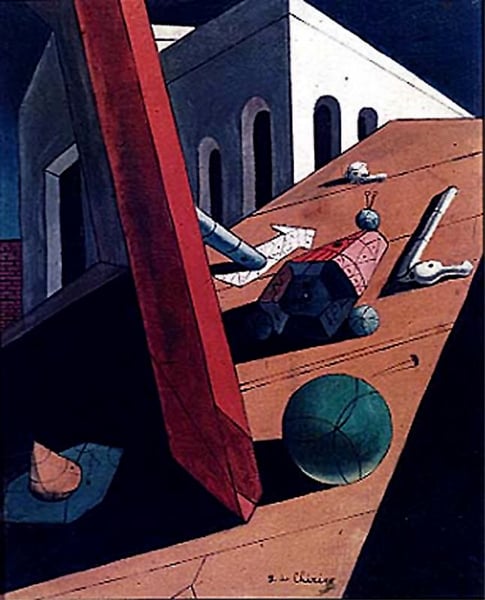
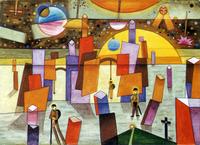
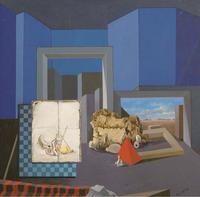
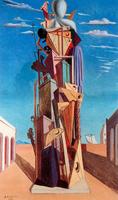
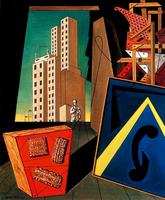
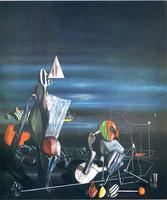
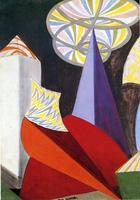
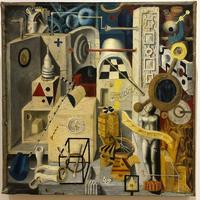
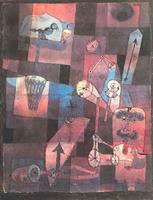
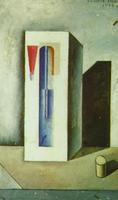
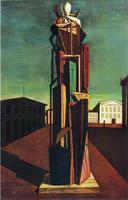
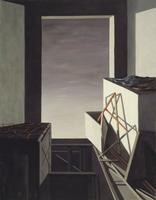
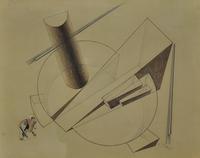
"The Evil Genius of a King" by Giorgio de Chirico stands as a quintessential example of Metaphysical art—a movement that sought to strip reality of its logical connections and replace them with haunting, dreamlike juxtapositions. As a cityscape, the work transforms the familiar urban environment into a stage for existential unease, employing de Chirico’s signature elements: deep, elongated shadows, stark classical arcades, and an unnatural, almost theatrical perspective. The title itself deepens the enigma—suggesting a malevolent, intangible force lurking within the architecture of power. The significance lies in how de Chirico disrupts spatial and temporal coherence; the empty piazza, the isolated statue, and the uncanny lighting create a sense of arrested time, foreshadowing the psychological landscapes that would later define Surrealism. This painting exemplifies the Metaphysical aim to evoke the mystery behind ordinary objects, making it a key work in the transition from post-Impressionism to the avant-garde’s exploration of the unconscious.