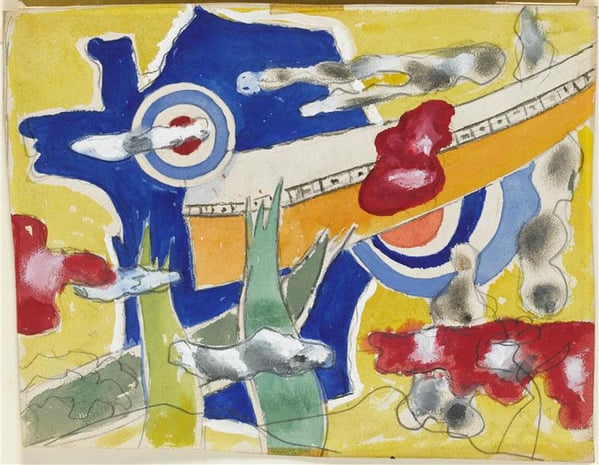
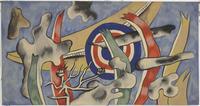
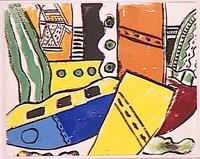
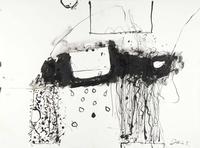
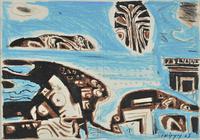
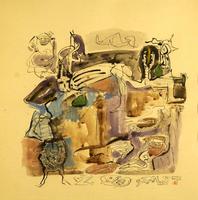
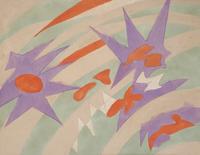
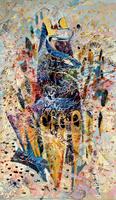
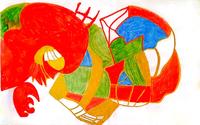
This preparatory study for a mural in the aviation center of Briey exemplifies Fernand Léger’s mature Purist aesthetic, a style he helped define alongside Amédée Ozenfant. While the finished decoration would have been monumental, this sketch reveals the core of Léger’s machine-age vision: a synthesis of human figures, mechanical forms, and geometric architecture into a dynamic, ordered composition. The study’s significance lies in its role as a bridge between fine art and functional public space—Léger believed modern art should serve modern life, and an aviation center, a temple of speed and industry, was the perfect venue. The sketch’s bold, simplified shapes and clean contours reflect Purism’s rejection of ornament in favor of precise, utilitarian clarity. Even in this preliminary state, one can see Léger emphasizing the interplay of cylinders, arcs, and straight lines, evoking propellers, wings, and factory machinery. The work is thus a key document of how Purism sought to harmonize art with the technological optimism of the 1920s, and it demonstrates Léger’s lifelong commitment to making the industrial world legible and celebratory through paint.