
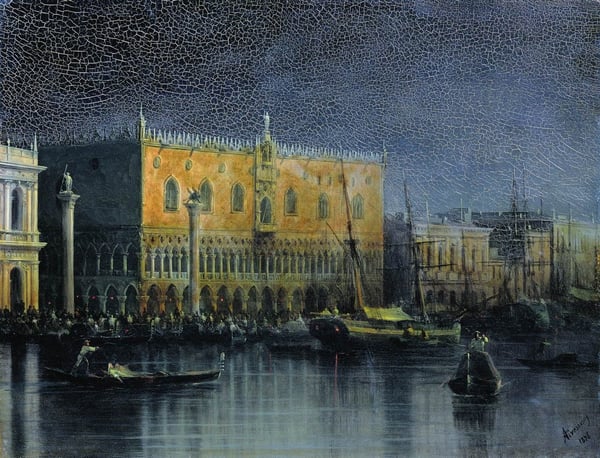
Analisi esperta di Palace rains in Venice by moonlight di Ivan Aivazovsky
Stile: Romanticism · Genere: cityscape
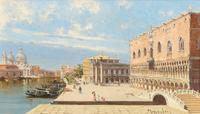
Expert Analysis: "Palace Rains in Venice by Moonlight" by Ivan Aivazovsky
Style & Period Context:
Aivazovsky is primarily celebrated as the preeminent Romantic marine painter of the 19th century, yet this work—a cityscape—demonstrates his ability to channel the core tenets of Romanticism through an urban, nocturnal lens. Romanticism prized emotion, the sublime power of nature, and dramatic atmospheric effects. Here, Aivazovsky replaces stormy seas with a rain-soaked Venetian canal, but the same sense of awe and transient beauty prevails.
Significance of the Work:
-
Mastery of Light and Atmosphere – Aivazovsky was renowned for his ability to render water, moonlight, and sky with uncanny luminosity. In this painting, moonlight pierces rain clouds and reflects off the wet surfaces of palaces and canals. The interplay of cool silver light against warm, rain-drenched architecture creates a dreamlike, almost theatrical mood—hallmark of Romantic sublimity.
-
Romanticizing Venice – Venice was a favorite subject for Romantic artists and writers (e.g., Byron, Turner), symbolizing both decayed grandeur and poetic melancholy. Aivazovsky’s choice to depict the city in rain and moonlight rather than in bright sunlight emphasizes impermanence and mystery. The “palace rains” suggest a silent, fleeting moment where architecture seems to dissolve into the elements—an expression of the Romantic fascination with the transient and the sublime.
-
Genre Innovation – While Aivazovsky’s reputation rests on sea battles and shipwrecks, this cityscape proves his versatility. By applying his signature technique of translucent glazes to a land-based scene, he blurs the boundary between marine and urban painting. The water is still the protagonist, but now it is a quiet, reflective surface rather than a raging force—demonstrating his nuanced control over mood.
-
Emotional Resonance – The work evokes a hushed, introspective solitude. Rain and moonlight soften the hard lines of Renaissance palaces, inviting the viewer to contemplate the melancholy beauty of a city at night. This emotional directness—a key Romantic goal—makes the painting significant as a perfect fusion of place, weather, and sentiment.
Conclusion:
“Palace Rains in Venice by Moonlight” stands as a testament to Aivazovsky’s ability to harness Romantic atmospheric drama in an urban context. It is a masterclass in light, water, and emotion, expanding the Romantic cityscape beyond mere topography into a poetic meditation on the sublime. The painting’s significance lies in its quiet, rain-soaked luminosity—a signature of the artist’s genius applied to one of the most evocative settings in art history.
Visivamente simili
20 opere con composizione e palette affini
Riva degli Schiavoni: Looking East
Canaletto
The Molo and the Piazzetta San Marco, Venice
Canaletto
Riva degli Schiavoni Looking East
Canaletto
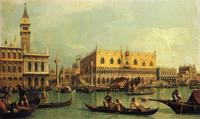
Piazzetta and the Doge's Palace from the Bacino di San Marco
Canaletto
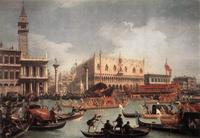
The Bucintore Returning to the Molo on Ascension Day
Canaletto
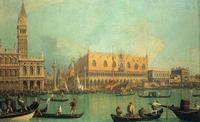
The Doge's Palace with the Piazza di San Marco
Canaletto
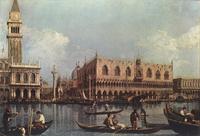
View of the St. Mark's Basin
Canaletto
Venice Veduta
Bernardo Bellotto
Veduta di Venezia con Palazzo Ducale
Luca Carlevaris
Venice
Carl Ludwig Hoffmeister
View of the Ducal Palace
Canaletto
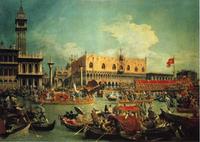
The Bucintoro by the Molo on Ascension Day
Canaletto
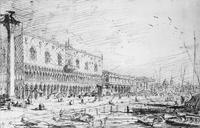
Venice: Riva degli Schiavoni
Canaletto
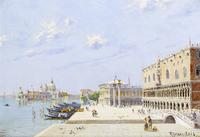
La Piazzetta, Palazzo Ducale, Venezia
Antonietta Brandeis
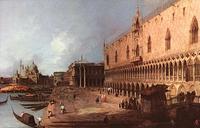
Doge's Palace
Canaletto
Venice, a View of the Piazzetta Looking South with the Palazzo Ducale
Francesco Guardi
The Doge's Palace, Venice
Richard Parkes Bonington
Return of the Bucentoro to the Molo on Ascension Day
Canaletto
Vista de Venicia
Gustaf Wilhelm Palm
Palazzo Ducale
Antonietta Brandeis