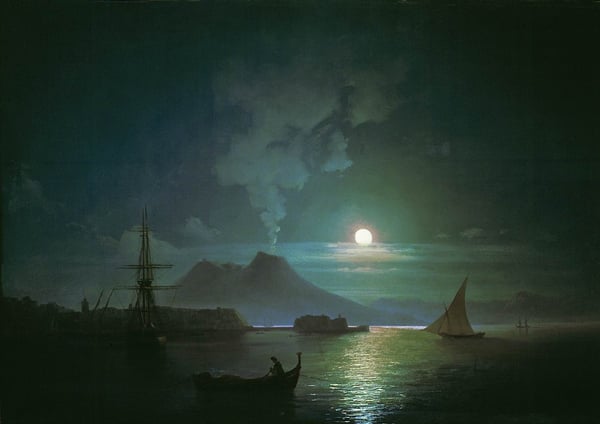
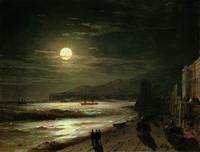
Expert Analysis: "The Bay of Naples at moonlight night. Vesuvius" by Ivan Aivazovsky
Within the Romantic tradition, this landscape achieves its significance through the dramatic interplay between two opposing natural forces—the serene moonlight and the smoldering threat of Vesuvius. Aivazovsky uses the genre of landscape not merely to depict a location, but to evoke the sublime: the simultaneous beauty and terror of nature that Romanticism prized above all. The quiet, reflective glow of the moon on the bay creates a mood of lyrical calm, while the distant volcano introduces an undercurrent of latent power and mortal fragility. This tension between stillness and potential devastation encapsulates Romanticism’s core preoccupation with emotion, awe, and the transcendent power of the natural world. The work is notable for its atmospheric treatment of light—moonlight diffused across water—which transforms a specific geographical scene into a universal meditation on the fleeting, dramatic majesty of night and fire.