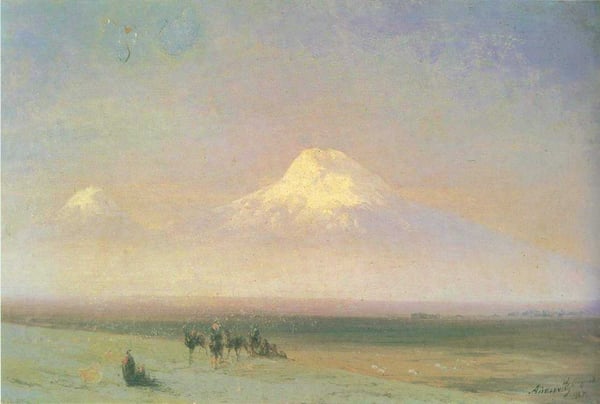
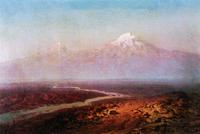
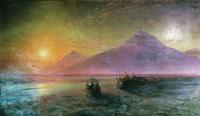
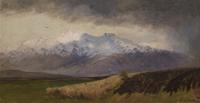
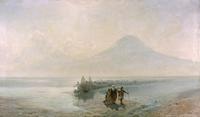
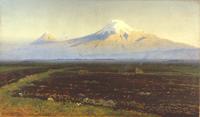
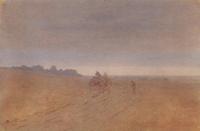
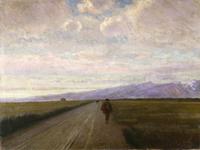
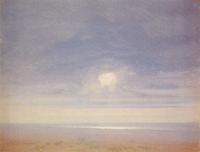
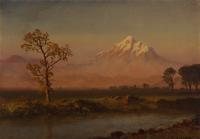
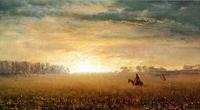
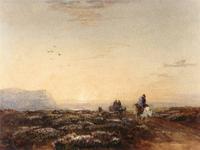
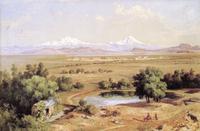
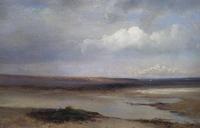
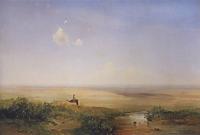
The significance of Ivan Aivazovsky’s The Mountain Ararat lies in its fusion of Romantic landscape ideals with a potent cultural and spiritual symbol. While Aivazovsky is renowned for his marine paintings, here he applies his mastery of atmospheric light and dramatic scale to the terrestrial sublime. The mountain Ararat, steeped in biblical resonance as the traditional resting place of Noah’s Ark, is rendered not as a precise topographic record but as an emotive, almost mythic presence. The Romantic style amplifies this: sweeping cloud banks, a low horizon, and a luminous sky evoke the awe and transcendence central to the movement, transforming a geographical feature into a universal emblem of nature’s majesty and divine mystery. For its blend of serene grandeur with layered historical and religious connotations, the work stands as a distinctive example of Romanticism’s power to elevate landscape into a vehicle for the sublime.