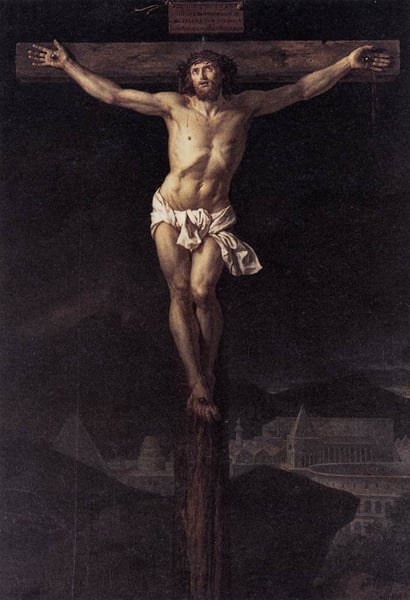
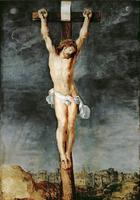
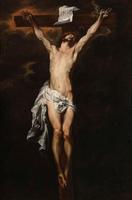
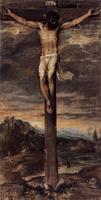
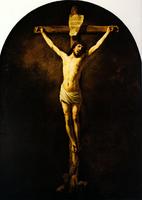
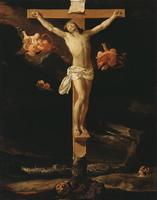
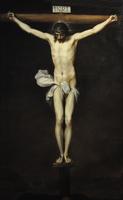
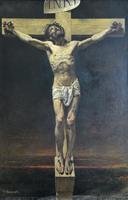
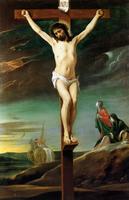
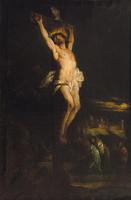
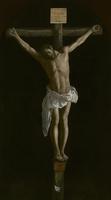
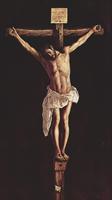
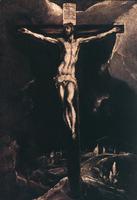
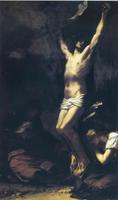
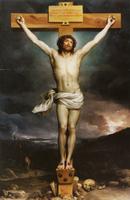
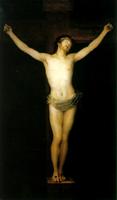
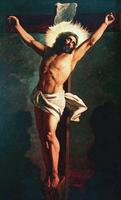
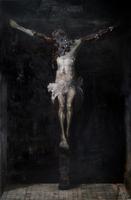
Jacques-Louis David’s Christ on the Cross (1782) is a pivotal example of how Neoclassicism redefined religious painting in the late 18th century. David, already emerging as the foremost proponent of the Neoclassical style, deliberately rejected the emotional turbulence and theatrical light of Baroque Crucifixion scenes. Instead, he presents a stark, rational composition: Christ’s body is rendered with sculptural precision, symmetrical and calm, while the cross is set against a severe, muted landscape. The drapery, the anatomical idealization, and the restrained grief of the Virgin and Saint John all echo classical relief sculpture rather than devotional fervor.
What makes this work significant is its fusion of sacred subject with Enlightenment principles. David treats the Crucifixion not as a vehicle for mystical pathos but as a moral exemplar of stoic sacrifice—a theme that would later inform his revolutionary works like The Death of Marat. The painting’s cool, clear light and balanced geometry assert reason over emotion, aligning religious art with the Neoclassical pursuit of universal, timeless truth. In doing so, Christ on the Cross marks a turning point where traditional piety gives way to a secular, civic-minded morality, anticipating the ideological art of the French Revolution.