Expert Analysis: "Christ on the Cross" by El Greco
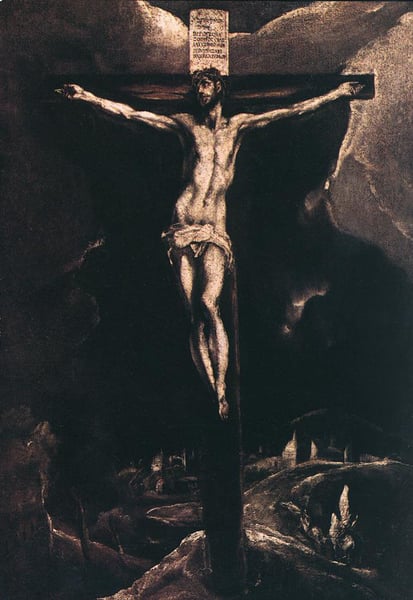
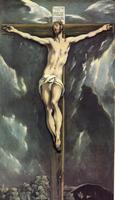
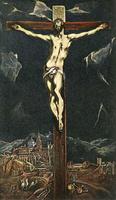
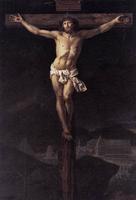
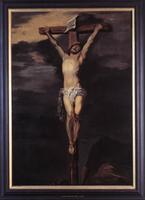
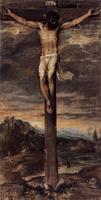
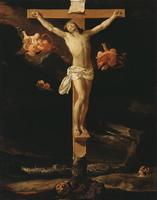
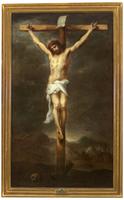
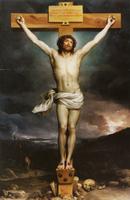
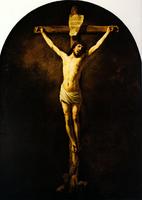
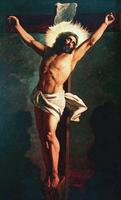
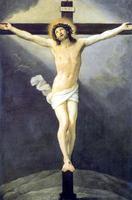
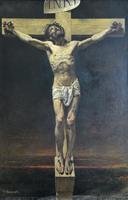
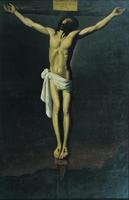
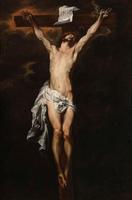
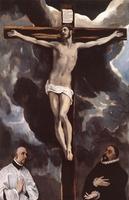
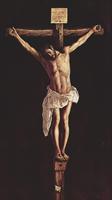
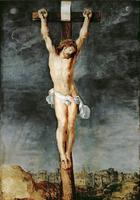
El Greco’s Christ on the Cross stands as a defining masterpiece of Mannerist religious painting from his Spanish period. Rather than pursuing the classical harmony and naturalism of the High Renaissance, El Greco deliberately distorts form and space to heighten spiritual drama. The elongated, slender body of Christ—an iconic Mannerist trait—creates an almost supernatural grace, emphasizing the divine over the human. The dramatic chiaroscuro and stormy, abstracted sky push the scene into a realm of intense emotional and mystical experience, aligning with the Counter-Reformation’s call for art that inspires piety and awe.
Within the Spanish period, this work synthesizes El Greco’s Byzantine iconographic roots with Venetian colorism and Mannerist anti-naturalism. The result is a uniquely personal vision: the cross is set against a dark, brooding background that isolates the figure, drawing the viewer’s focus entirely onto the suffering yet serene Christ. The lack of narrative details—no mourners, no landscape—underscores the timeless, universal sacrifice. This painting is significant for pushing Mannerism beyond mere artifice into a powerful devotional tool, making it a cornerstone of El Greco’s Spanish oeuvre and a bridge between Late Renaissance spirituality and Baroque emotionalism.