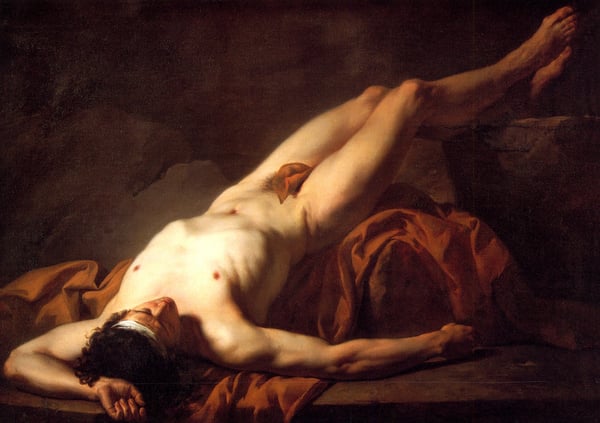
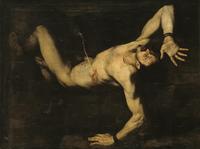
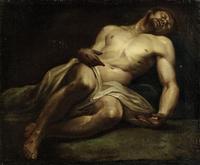
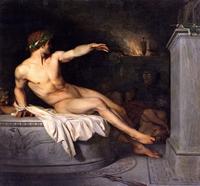
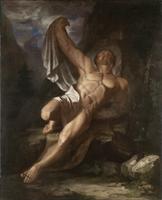
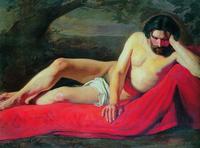
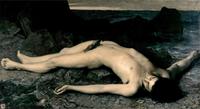
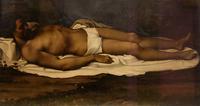
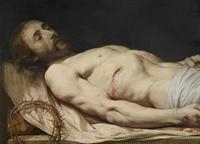
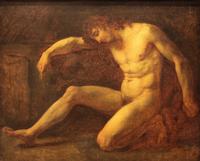
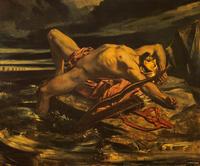
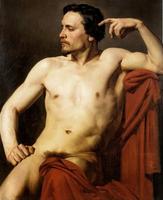
This artwork, Male Nude known as Hector by Jacques-Louis David, is a compelling study in Neoclassical idealism. Painted in the mythological genre, it depicts the Trojan hero Hector as an archetype of virtuous manhood—a central concern of the Neoclassical movement.
What makes it significant is its function as a preparatory figure study for a larger history painting, revealing David’s rigorous academic method. Neoclassicism demanded moral gravity and anatomical perfection; here, the nude embodies both. The term “Hector” signals a connection to classical epic and heroic sacrifice, but the painting focuses solely on the idealized male form, stripped of narrative distraction. This concentration allowed David to perfect the musculature and contrapposto—balanced, yet dynamic—that would later define his history paintings, such as The Oath of the Horatii.
In its restrained, sculptural clarity, Male Nude known as Hector exemplifies how Neoclassicism revived Greco-Roman formal values, prioritizing rational structure over Baroque emotion. David’s study elevates a single figure into a timeless emblem of civic virtue and physical perfection, making it a cornerstone of his oeuvre and a testament to Neoclassical artistic discipline.