Anthony van Dyck sanatçısının Portrait of a Noble Genoese Lady eseri hakkında uzman analizi
Tarz: Baroque · Tür: portrait
Expert Analysis of "Portrait of a Noble Genoese Lady" by Anthony van Dyck
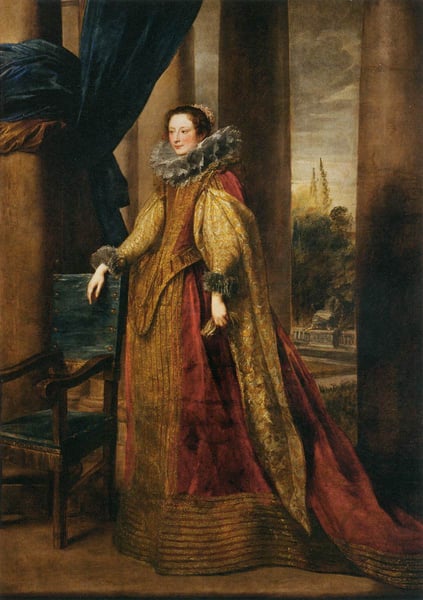
This work epitomizes van Dyck’s transformative influence on Baroque portraiture, particularly during his Genoese period (c. 1621–1627). The painting’s significance lies in how it elevates the portrait genre from mere likeness to a statement of aristocratic grace and psychological nuance, setting a new standard for European court portraiture for centuries.
Stylistic and Period Importance
As a Baroque portrait, the work shifts away from the dramatic, dynamic energy of contemporary religious or mythological scenes. Instead, van Dyck harnesses the Baroque’s theatricality through subtle means: the sitter’s poised, slightly turned posture creates a sense of living presence, while the rich, flowing fabrics and luminous pearls capture the opulence of Genoese nobility. The use of deep chiaroscuro—a hallmark of the Baroque—models the lady’s face and hands with soft, naturalistic shadows, lending her an air of dignified introspection rather than flamboyant display.
Van Dyck’s Contribution to Portraiture
Unlike his mentor Rubens, who favored vigorous movement, van Dyck perfected a more elegant, “aristocratic” repose. Here, the noblewoman’s direct yet reserved gaze, the subtle asymmetry of her pose, and the delicate handling of her satin gown demonstrate his ability to convey both status and individuality. This approach profoundly influenced later portraitists, especially in the English court where van Dyck would later define the image of royalty.
Cultural and Historical Context
Painted during the height of the Genoese Republic’s wealth, the portrait reflects the city’s cosmopolitan taste. Van Dyck’s Genoese works were instrumental in popularizing the full-length, three-quarter-view format for aristocratic portraits, a format that would become a norm across Europe. The understated luxury—the luminous pearl earrings, the sumptuous brocade—speaks to the sitter’s high rank without overwhelming the viewer, a balance van Dyck mastered.
In sum, this portrait is significant as a landmark of Baroque portraiture: it transforms a commission into an art form of psychological depth and refined elegance, cementing van Dyck’s reputation as the preeminent portraitist of his era.
Museum / Gallery
Görsel olarak benzer
İlişkili kompozisyon ve renk paletine sahip 20 eser
Portrait of a Lady, presumed to be the Marquise Geromina Spinola Doria de Genes (oil on canvas)
Anthony van Dyck
Portrait of Marchesa Balbi
Anthony van Dyck
Constance of Austria
Pieter Soutman
Helena Fourment
Peter Paul Rubens
Queen Victoria (detail)
David Wilkie
24. Joanna of Austria, Grand Duchess of Tuscany, Mother of Marie De' Medici
Peter Paul Rubens
Portrait of Susanna Fourment and Her Daughter
Anthony van Dyck
Portrait of a Woman
Cornelis de Vos
Queen Charlotte, Wife of George III
Thomas Lawrence
Portrait of a lady, possibly Margaret Cecil, Countess of Ranelagh, seated three-quarter length, in Coronation robes
Godfrey Kneller
Catherine II
Dmitry Levitzky
Portrait of Queen Charlotte
Allan Ramsay
Maria Theresia Kaiserin von Österreich Ganzfigurenbildnis in blauem dekolletiertem, mit Brokatstickereien und Edelsteinen verziertem Gewand
Marten van Mytens the Younger
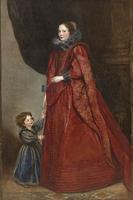
A Genoese Lady with Her Child
Anthony van Dyck
Queen Isabel, Standing
Diego Velazquez
Portrait of an Unknown Woman
Anthony van Dyck
Queen Mariana
Diego Velazquez
Portrait of Maria Louisa de Tassis
Anthony van Dyck
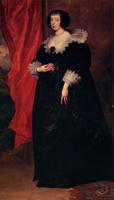
Portrait of Marguerite of Lorraine, Duchess of Orleans
Anthony van Dyck
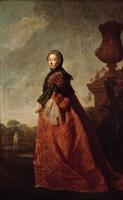
Portrait of Augusta of Saxe Gotha, Princess of Wales
Allan Ramsay