Expertenanalyse zu Anthony van Dycks Portrait of an English Gentleman
Stil: Baroque · Genre: portrait
Expert Analysis: "Portrait of an English Gentleman" by Anthony van Dyck
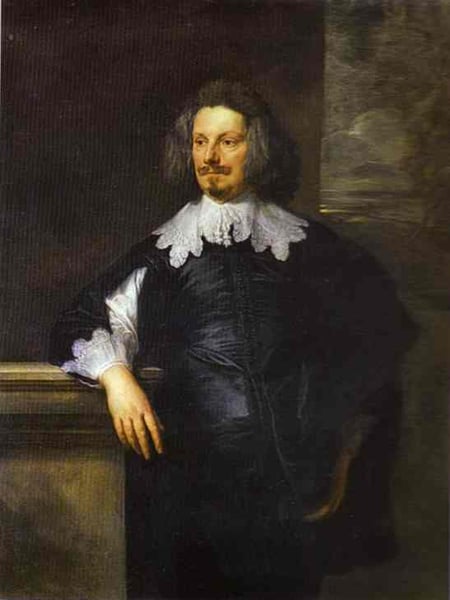
As a defining work of the Baroque period, Anthony van Dyck’s Portrait of an English Gentleman epitomizes the artist’s revolutionary approach to portraiture—one that elevated the genre from mere likeness to a statement of aristocratic grace and psychological depth. Painted during van Dyck’s tenure as court painter to King Charles I (1632–1641), this portrait exemplifies the Baroque ideals of dynamism, rich texture, and theatrical presence, while also cementing the “van Dyckian” model that would dominate English painting for centuries.
Significance Within Baroque & Genre
1. Mastery of Baroque Flourish
Van Dyck harnesses the Baroque language of movement and drama, not through overt action but through subtle compositional tension. The gentleman’s pose—slightly turned, one hand on hip, the other perhaps resting on a sword or ledge—suggests both ease and authority. The use of chiaroscuro (strong contrasts of light and shadow) sculpts the sitter’s face and hands, lending a luminous, almost spiritual quality to the flesh, while the dark, undefined background pushes the figure forward. The rich, flowing fabrics—likely silk or velvet—are rendered with loose, confident brushstrokes that capture the iridescent sheen of Baroque luxury.
2. Psychological Intimacy and Aristocratic Ideal
Van Dyck transformed portraiture by infusing it with psychological nuance. Unlike the stiff formality of earlier court portraits, this work presents the gentleman with a cool, self-assured gaze and a faint, enigmatic smile—suggesting intellect, refinement, and a hint of melancholy. This blend of hauteur and humanity became the template for the “Cavalier” portrait, influencing artists from Thomas Gainsborough to Joshua Reynolds. The sitter is not merely a nobleman; he is an embodiment of the Baroque ideal of sprezzatura—effortless grace born from cultivated skill.
3. Technical Virtuosity and Legacy
Van Dyck’s handling of paint is extraordinary: the fluid, almost calligraphic strokes in the hair and lace collar contrast with the smoother modelling of the face. This variety of texture—a hallmark of Baroque painting—creates a sense of immediacy and life. Moreover, van Dyck’s portraits redefined the social function of the genre. In 17th-century England, such works were not just records of appearance but tools of political and cultural power, projecting an image of civilized monarchy and courtly sophistication.
Conclusion
Portrait of an English Gentleman is significant as a quintessential example of van Dyck’s mature style—a synthesis of Flemish realism, Italianate grandeur, and English elegance. It stands as a cornerstone of Baroque portraiture, demonstrating how the genre could achieve both aristocratic pomp and intimate human presence. For centuries, van Dyck’s “English Gentleman” served as the archetype of the cultured nobleman, shaping the visual identity of the English elite and the very course of Western portraiture.
Museum / Gallery
Visuell ähnlich
20 Werke mit ähnlicher Komposition und Farbpalette
Portrait of a Gentleman Dressed in Black, in Front of a Pillar
Anthony van Dyck
Portrait of a Man
Ferdinand Bol
Portrait of Sir Thomas Chaloner
Anthony van Dyck
Portrait Of Quintijn Symons
Anthony van Dyck
Portrait Of A Man
Frans Hals
Full Length Portrait of a Standing Man
Rembrandt
Portrait of a Man
Frans Hals
Portrait of a Man
Frans Hals
Portrait of a seated man rising from his chair
Rembrandt
Portrait of a Man
Frans Hals
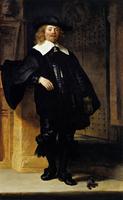
Portrait of Andries de Graeff
Rembrandt
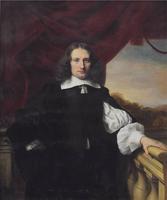
Portrait of Pieter Bouwens
Ferdinand Bol
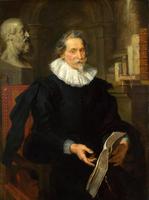
Portrait of Ludovicus Nonnius
Peter Paul Rubens
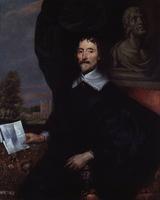
Sir Thomas Aylesbury
William Dobson
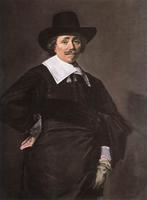
Portrait of a Standing Man
Frans Hals
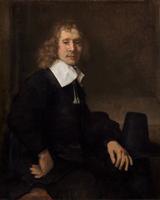
A Young Man at a Table (possibly Govaert Flinck)
Rembrandt
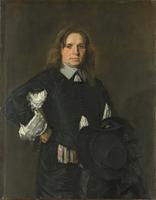
Portrait of a Man
Frans Hals
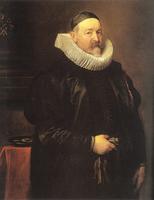
Portrait of Adriaen Stevens
Anthony van Dyck
John Cotton
Daniel Mytens the Elder
Portrait of Tieleman Roosterman
Frans Hals