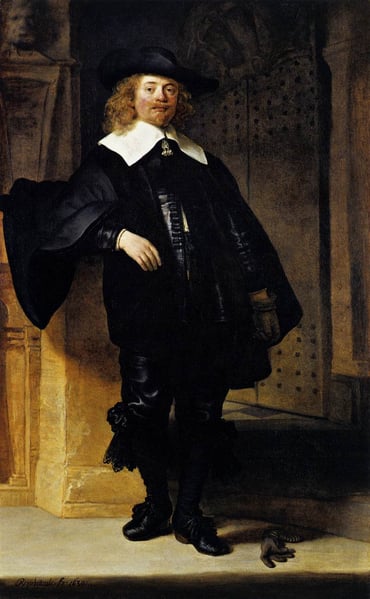
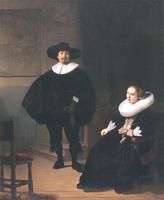
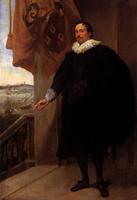
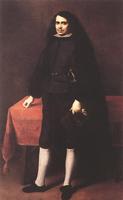
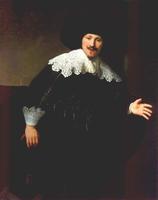
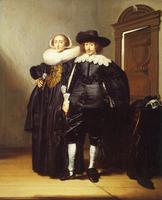
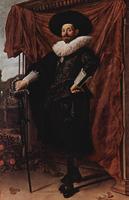
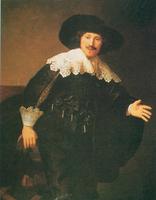
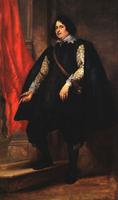
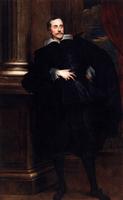
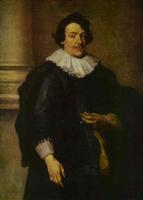
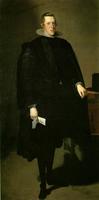
As a quintessential Baroque portrait by Rembrandt, this work exemplifies the period’s drive toward dramatic realism and psychological depth. Rembrandt’s mastery of chiaroscuro—the stark interplay of light and shadow—imbues the sitter with a sense of presence and individuality, elevating the portrait beyond mere likeness to a study of character and status. Within the Baroque era, portraiture served both as a record of power and as an exploration of human emotion, and Rembrandt’s approach here pushes the genre toward intimate, dynamic immediacy. The painting’s significance lies in how it captures the grandeur and introspection typical of Baroque art, while demonstrating Rembrandt’s unique ability to convey the inner life of his subject through subtle modeling and restrained palette.