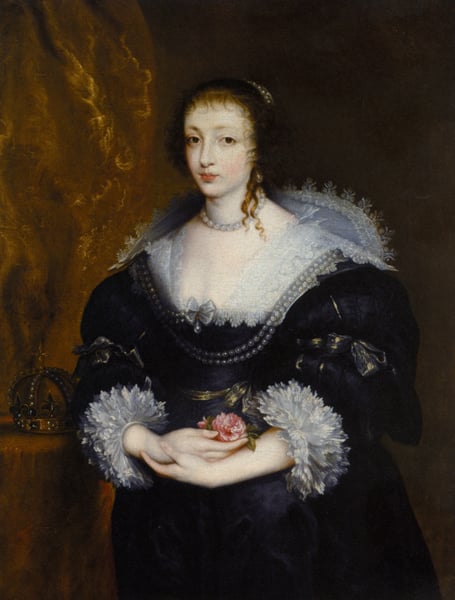
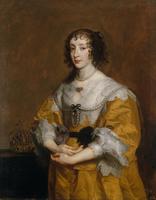
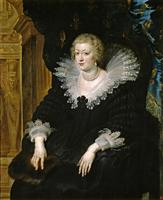
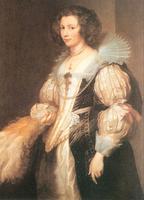
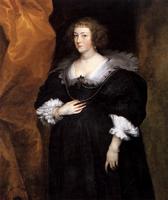
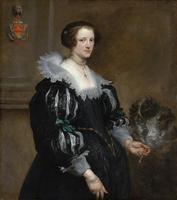
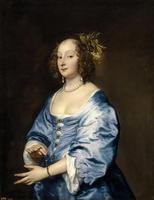
Anthony van Dyck’s "Portrait of Queen Henrietta Maria" is a masterful example of Baroque portraiture, a genre in which the artist excelled and which he helped define for the European court. Painted during his tenure as the leading court painter to Charles I, this work is significant for its embodiment of the Baroque style’s core principles: dramatic elegance, rich color, and a sense of regal grandeur. Van Dyck’s skill lies in capturing both the queen’s royal status and a refined, naturalistic grace—a hallmark that set the standard for aristocratic portraiture in the 17th century. The painting’s significance rests on how Van Dyck uses Baroque theatricality (through pose, fabric, and lighting) not merely to dazzle, but to convey the monarch’s divine right and personal dignity. This portrait, like many of his court works, elevated the genre from simple likeness to a statement of power and refinement, influencing portraitists for generations.