Analisi esperta di Portrait of Eleonora Gonzaga di Titian
Stile: High Renaissance · Genere: portrait
Expert Analysis: "Portrait of Eleonora Gonzaga" by Titian
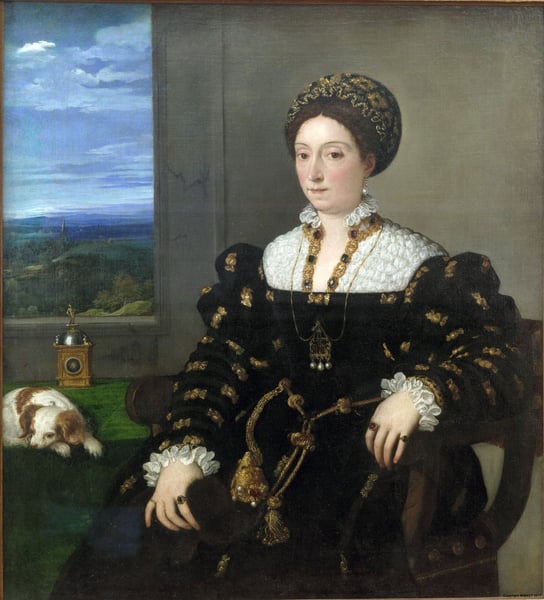
As a masterwork of the High Renaissance, Titian’s Portrait of Eleonora Gonzaga exemplifies the period’s revolutionary approach to portraiture—moving beyond mere likeness to convey psychological depth, social status, and the ideal of sprezzatura (effortless grace). Painted during Titian’s mature phase, the work is significant for its seamless fusion of naturalism and aristocratic dignity.
Break from Convention: Unlike earlier, rigid profile portraits, Titian presents Eleonora in a three-quarter view, engaging the viewer directly. This compositional choice, typical of High Renaissance innovation, allows for a more intimate and dynamic interaction. Her serene expression and relaxed posture convey not just beauty but a composed intelligence, reflecting the humanist ideals of the era.
Mastery of Color and Texture: Titian’s handling of oil paint—a medium that defined the Venetian High Renaissance—is evident in the rich, luminous fabrics and the subtle modeling of her skin. The deep reds and golds of her gown and jewelry speak to her status as Duchess of Urbino, yet the soft, almost atmospheric background focuses attention on her face and hands, emphasizing character over opulence.
Symbolism and Identity: The portrait functions as a political statement: Eleonora is depicted not only as a noblewoman but as a cultivated patron of the arts, a role that elevated her court’s prestige. The inclusion of a small dog (often a symbol of fidelity) and the careful rendering of her cameo brooch (likely referencing classical antiquity) align with High Renaissance practice of embedding personal and moral allegories within likenesses.
Significance within High Renaissance Portraiture: Titian’s work stands alongside that of Leonardo and Raphael in redefining portraiture as a vehicle for humanist expression. Here, he achieves a psychological resonance that transcends mere documentation. The painting’s balanced composition, refined naturalism, and nuanced use of chiaroscuro mark it as a quintessential example of the High Renaissance’s pursuit of harmony and idealized reality—making it a cornerstone of Western portraiture.
Museum / Gallery
Visivamente simili
20 opere con composizione e palette affini
Portrait of Isabella De' Medici
Alessandro Allori
The Beauty
Titian
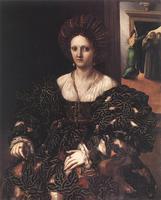
Portrait of a Woman
Giulio Romano
Portrait of Queen Henrietta Maria
Anthony van Dyck
Portrait of Laudomia de' Medici
Agnolo Bronzino
Portrait of Jacqueline Van Caestre Wife of Jean Charles De Cordes
Peter Paul Rubens
Portrait of a Lady
Alessandro Allori
Portrait of a Woman
Alessandro Allori
Ritratto Di Nobildonna
Alessandro Allori
Mrs Hugh Robertson of Gartloch (1798–1846)
John Graham-Gilbert
Portrait of a Woman
Pieter Soutman
Portrait of a young lady, said to be Comtesse de Ribaucourt
Cornelis de Vos
Portrait of Antonia Canis
Cornelis de Vos
Anna Wake
Anthony van Dyck
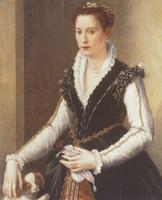
Isabella De' Medici Orsini with a Dog
Alessandro Allori
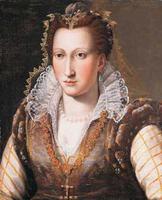
Unknown Lady
Agnolo Bronzino
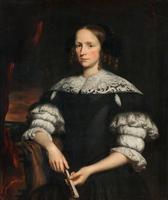
Portrait of a Woman with a Fan
Nicolaes Maes
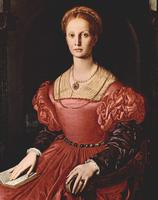
Lucrezia Panciatichi
Agnolo Bronzino
Petronella De Waert
Gerard Terborch
Anne of Austria, Queen of France
Peter Paul Rubens