Analisi esperta di Martin Luther as a Monk di Lucas Cranach the Elder
Stile: Northern Renaissance · Genere: portrait
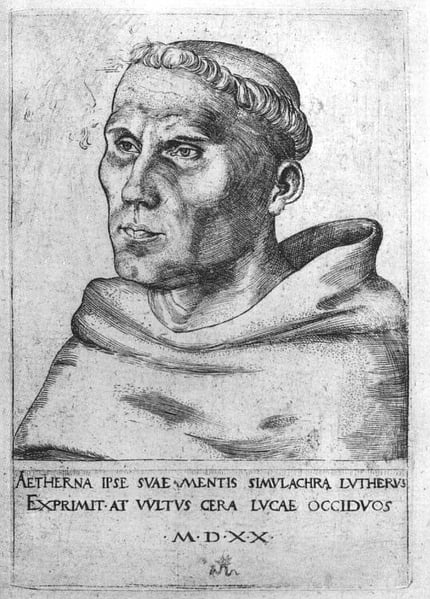
As an expert art historian, I offer the following analysis of Lucas Cranach the Elder’s Martin Luther as a Monk, a masterwork of the Northern Renaissance portrait genre.
Significance within the Northern Renaissance and Luther’s Reformation
This portrait is not merely a likeness; it is a foundational image in the visual construction of the Reformation. Painted by Cranach—a close friend of Luther and the de facto visual propagandist of the new movement—the work captures the reformer at a crucial moment: still in the habit of an Augustinian monk, yet on the cusp of his epochal break with Rome. Cranach’s Northern Renaissance style is evident in the meticulous attention to surface detail: the coarse, dark wool of the frock, the precise folds of the cowl, and the soft, unidealized texture of Luther’s skin. This verisimilitude grounds the sitter in a tangible, everyday reality, a hallmark of Northern European art that privileged empirical observation over idealized form.
Yet the portrait’s true power lies in its psychological and symbolic restraint. Unlike the opulent, status-laden portraits of courtly patrons, Cranach presents Luther with stark simplicity. The unadorned background forces the viewer’s full attention onto the sitter’s face—and more specifically, on the quiet intensity of his gaze. There is no halo, no clerical ornament, no attribute of worldly power. Instead, Cranach dramatizes the interior life: the slight tension in the jaw, the downward turn of the mouth that suggests both humility and resolve, the eyes that seem to look beyond the viewer. This aligns perfectly with the Northern Renaissance’s deepening interest in individuality and personal piety, but also with Luther’s own theology of sola fide—faith alone—which rejected outward display in favor of inner conviction.
The portrait thus becomes an argument: here is a man of Scripture, not of ceremony; a monk whose true authority stems from his conscience and his calling. Cranach’s choice to show Luther as a monk—even after his public break with monastic vows—further amplifies the irony, turning the habit into a symbol of a reformed Church that would soon shed such vestments. In its quiet, unflinching realism, Martin Luther as a Monk is a landmark of Northern Renaissance portraiture and a visual manifesto for the Reformation itself.
Visivamente simili
20 opere con composizione e palette affini
Maestro Frai Luis de Leon
Francisco Pacheco
Portrait of Martin Luther
Hans Baldung
Fray Luis de Granada
Francisco Pacheco
San Juan de la Cruz
Francisco Pacheco
Portrait of Father J. Joachim Berthier
Józef Mehoffer
Leonhard Wagner, Profil nach rechts
Hans Holbein the Elder
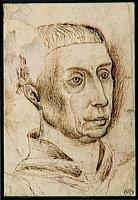
Portrait of Philippe le Bon
Rogier van der Weyden
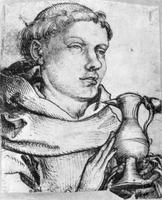
Bust of a Monk Assisting at Communion
Martin Schongauer
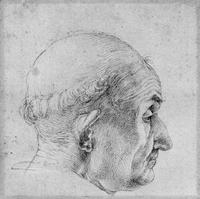
Head of a Pope
Albrecht Durer
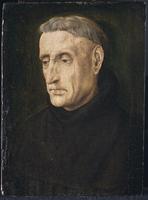
Benedictine Monk
Hugo van der Goes
Self-portrait
Antonello da Messina
Portrait of Cardinal Albrecht of Brandenburg
Albrecht Durer
Study of Two Carthusian Monks
Jacopo Pontormo
Potrait of a Carthusian
Petrus Christus
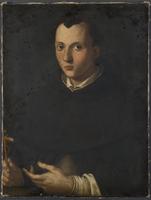
Portrait of a Man
Alessandro Allori
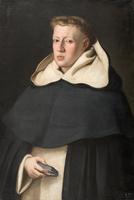
Friar Alonso de Sant Tomàs
Juan Bautista Maíno
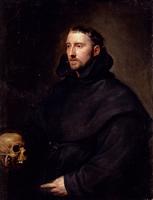
Portrait Of A Monk Of The Benedictine Order, Holding A Skull
Anthony van Dyck
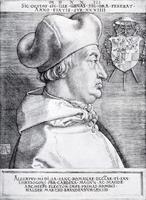
Cardinal Albrecht Of Brandenburg
Albrecht Durer
Potrait of Don Baldassarre
Pietro Perugino
São Francisco De Assis
Paulo Fontes