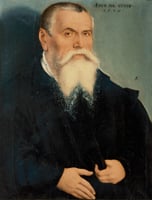
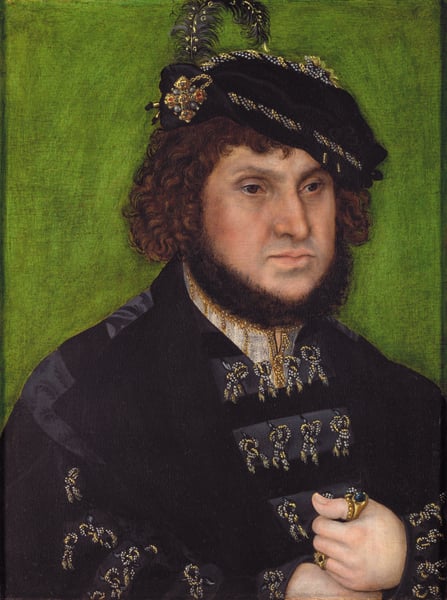
Expert analysis of Lucas Cranach the Elder’s Portrait of Duke Johann der Bestandige of Saxony
Style: Northern Renaissance · Genre: portrait
As an art historian specializing in Northern Renaissance portraiture, I can offer the following expert analysis based on the provided facts.
Artwork: Portrait of Duke Johann der Bestandige of Saxony by Lucas Cranach the Elder Style: Northern Renaissance | Genre: Portrait
Expert Analysis and Significance
This portrait by Lucas Cranach the Elder holds a dual significance: it is both a masterful example of Northern Renaissance portraiture and a crucial historical document of the Protestant Reformation. Cranach, as court painter to the Electors of Saxony, was not merely a recorder of likenesses but a visual propagandist for his patrons. Duke Johann der Bestandige (John the Steadfast) was a pivotal figure—the brother and successor of Frederick the Wise, and a staunch defender of Martin Luther and the Reformation.
Stylistic Significance: The painting exemplifies key Northern Renaissance traits: meticulous attention to surface detail, particularly in the rendering of textiles, fur, and jewelry; a sober, three-quarter-length pose that conveys both authority and piety; and a restrained, naturalistic palette. Cranach’s characteristic elongation of the figure and slightly stylized facial features—the sharp, intelligent eyes and firm mouth—imbue the Duke with an air of unwavering resolve. The work bridges the late Gothic tradition of precise craftsmanship with the emerging humanist interest in individual character.
Historical Significance: The portrait’s true importance lies in its political and religious context. Duke Johann was known for his unyielding commitment to Lutheranism—his epithet “der Bestandige” (the Steadfast) refers to his refusal to compromise at the Diet of Augsburg (1530). Cranach’s depiction is not merely a status symbol; it is a statement of ideological conviction. The sitter’s sober attire and direct gaze align with Protestant ideals of modesty and personal faith, subtly opposing the opulent symbolism of Catholic court portraiture. This portrait, likely produced in Cranach’s workshop alongside many such images of Reformation leaders, helped solidify the visual identity of the nascent Protestant nobility.
In summary, this artwork is significant as a prime document of Cranach’s portraiture and as a powerful visual assertion of the Reformation’s political and spiritual authority. It reveals how the Northern Renaissance portrait genre was used not just to capture a face, but to shape history.
Museum / Gallery
Visually similar
20 works with related composition and palette
Portrait of a young man in hat
Lucas Cranach the Elder
Self Portrait
Joos van Cleve
Portrait of a Man
Hans Holbein the Elder
Portrait of Henry VIII, King of England
Hans Holbein the Younger
Portrait of Sir Nicholas Poyntz
Hans Holbein the Younger
Joachim I Nestor, Elector of Brandenburg
Lucas Cranach the Elder
Hans Caspar von Laubberg
Bernhard Strigel
Portrait of a Humanist
Quentin Matsys
Portrait of Elector Frederick the Wise in his Old Age
Lucas Cranach the Elder
Portrait of a Young Man
Albrecht Durer
Portrait of a Member of the Wedigh Family
Hans Holbein the Younger
Portrait of Francisco de los Cobos
Mabuse
Portrait of Martin Luther
Lucas Cranach the Elder
Martin Luther
Lucas Cranach the Elder
Self Portrait
Carel Fabritius
Abbot Jean Jacques Huber
Maurice Quentin de La Tour
Portrait of a Man
Quentin Matsys
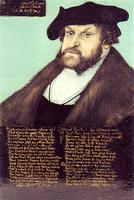
Portrait of Johann I the Steadfast, Elector of Saxony
Lucas Cranach the Elder
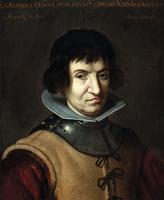
Catalina De Erauso
Juan van der Hamen
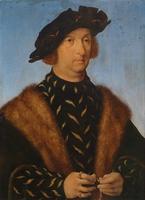
Bildnis eines Mannes der einen Rosenkranz in Händen hält
Joos van Cleve