Analisi esperta di Joachim I Nestor, Elector of Brandenburg di Lucas Cranach the Elder
Stile: Northern Renaissance · Genere: portrait
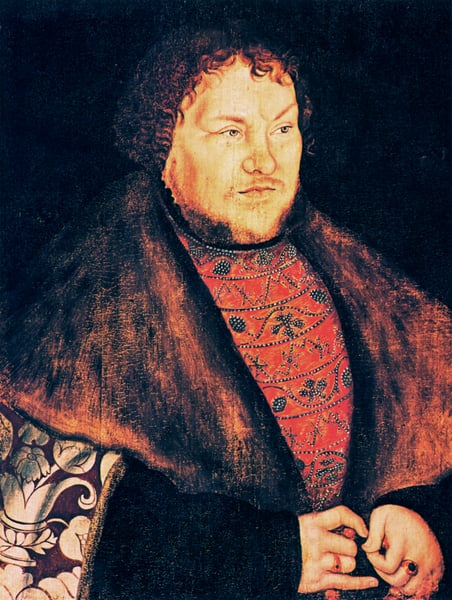
Expert Analysis: "Joachim I Nestor, Elector of Brandenburg" by Lucas Cranach the Elder
This work is a quintessential example of Northern Renaissance portraiture, a genre in which Lucas Cranach the Elder excelled. As court painter to the Electors of Saxony, Cranach specialized in precise, emblematic likenesses that conveyed both status and character. The portrait of Joachim I Nestor is significant for several reasons:
-
Political and Dynastic Symbolism: The sitter, Joachim I Nestor (1484–1535), was a powerful prince-elector of the Holy Roman Empire. In Northern Renaissance portraiture, such depictions served as tools of political propaganda, projecting authority, piety, and lineage. Cranach’s treatment—typically featuring a half-length figure, direct gaze, and meticulous rendering of luxurious fabrics and insignia—reinforces the Elector’s rank and the stability of his rule.
-
Stylistic Hallmarks of Cranach and the Northern Renaissance: Cranach was known for a refined linearity, cool palette, and a realism that balanced naturalism with idealization. The portrait likely includes symbolic details (e.g., a coat of arms, a sword, or a jeweled collar of a knightly order), which were standard in the period to denote membership in elite social or religious institutions. The careful attention to facial features—such as the sitter’s weathered skin and intense expression—reflects the Northern Renaissance’s emphasis on individual character and the transient nature of earthly life (a vanitas subtext).
-
Historical and Artistic Significance: This work exemplifies how Cranach navigated the tumultuous Reformation era. Joachim I Nestor was a staunch Catholic and opponent of Martin Luther, while Cranach himself was a close friend of Luther and a supporter of the Reformation. The portrait thus captures a moment of ideological tension, with Cranach’s artistry transcending personal belief to produce a dignified, politically charged image. The painting’s survival also underscores the enduring value of court portraiture as a record of power and personality in early modern Europe.
In summary, "Joachim I Nestor, Elector of Brandenburg" is significant as a masterwork of Northern Renaissance portraiture, demonstrating Cranach’s skill in merging realistic likeness with symbolic representation, and offering insight into the political and religious dynamics of 16th-century Germany.
Visivamente simili
20 opere con composizione e palette affini
Portrait of a young man in hat
Lucas Cranach the Elder
Portrait of Henry VIII, King of England
Hans Holbein the Younger
Portrait of Cardinal Albrecht of Brandenburg
Lucas Cranach the Elder
Portrait of Johann Friedrich, Elector of Saxony
Lucas Cranach the Elder
Hans Caspar von Laubberg
Bernhard Strigel
Portrait of Duke Johann der Bestandige of Saxony
Lucas Cranach the Elder
Portrait of Sir Henry Guildford
Hans Holbein the Younger
Johannes Carion
Lucas Cranach the Elder
Elector John the Constant of Saxony
Lucas Cranach the Elder
Portrait of Elector Frederick the Wise in his Old Age
Lucas Cranach the Elder
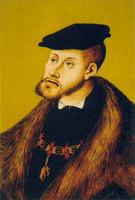
Portrait of Charles V
Lucas Cranach the Elder
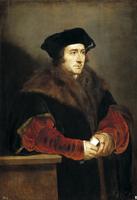
Portrait of Sir Thomas More
Peter Paul Rubens
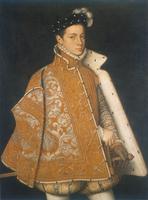
A portrait of a young Alessandro Farnese, the future Duke of Parma
Sofonisba Anguissola
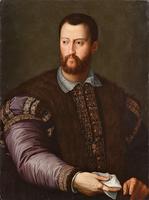
Portrait of Cosimo I De Medici
Alessandro Allori
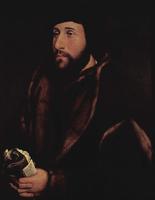
Portrait of a man with a letter and gloves
Hans Holbein the Younger
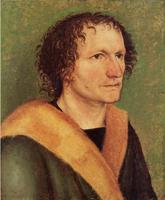
Male portrait before green base
Albrecht Durer
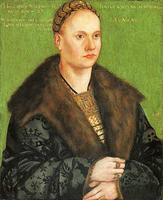
Christoph von Scheurl
Lucas Cranach the Elder
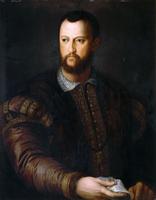
Portrait of Cosimo I De Medici
Alessandro Allori
Self-Portrait
Hans Baldung
Bildnis eines Mannes der einen Rosenkranz in Händen hält
Joos van Cleve