Analisi esperta di Reclining Diana di Lucas Cranach the Elder
Stile: Northern Renaissance · Genere: mythological painting
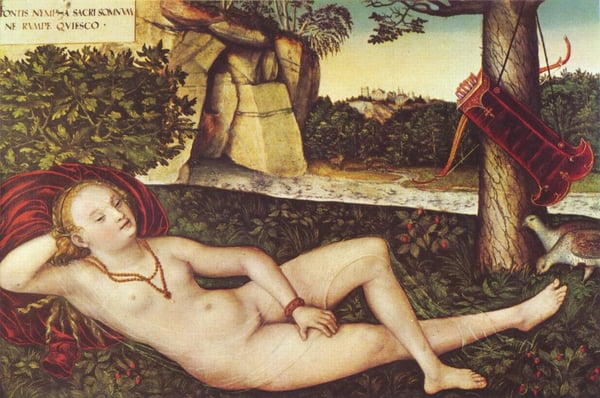
As an expert art historian, I will analyze "Reclining Diana" by Lucas Cranach the Elder based on the given facts. The work is a mythological painting from the Northern Renaissance, and its significance lies in Cranach’s distinct fusion of classical mythology with Northern European sensibilities, as well as his pioneering role in the development of the Cranach-style female nude.
Stylistic Significance: Cranach’s depiction of Diana, the goddess of the hunt, exemplifies the Northern Renaissance's adaptation of Italian Renaissance humanism while retaining a distinctly Germanic, linear elegance. The figure is typically rendered with elongated proportions, a small head, and a sinuous, almost mannerist contour—traits that became Cranach’s hallmark. Unlike the idealized, volumetric nudes of contemporary Italian masters (e.g., Titian or Giorgione), Cranach’s Diana is more decorative and slender, often set against a dark, neutral background that emphasizes the pale skin and delicate anatomy. This "Cranach figure" became a prototype for courtly, erotic allegory in Northern art.
Mythological Interpretation: The subject of the reclining Diana is significant because it merges the classical goddess of chastity and the hunt with a sensual, overtly erotic pose. Cranach often included subtle attributes—such as a bow, a quiver, or a stag—to identify her, but the reclining posture (adapted from Venetian reclining Venuses) transforms the goddess into an object of courtly desire. This reflects the paradoxical Renaissance fascination with classical mythology as both a moral allegory and a pretext for displaying the nude body. Cranach’s Diana is neither fully classical nor fully medieval; she is a hybrid of learned symbolism and decorative sensuality, tailored for the Saxon court.
Historical Context: Lucas Cranach the Elder was court painter to the Electors of Saxony and a close friend of Martin Luther. His mythological works, including Reclining Diana, were produced for a sophisticated, Protestant court audience. The painting’s significance lies in how it negotiates the tension between the Reformation’s suspicion of idolatry and the enduring appeal of pagan luxury. Cranach’s sleek, cold rendering avoids the sensual warmth of Italian nudes, adding a layer of intellectual distance that made such subjects acceptable in a Lutheran context. The precise, almost enamel-like finish and crisp outlines reflect his background as a printmaker and his mastery of oil on panel.
Summary: Reclining Diana is significant as a defining example of the Cranach-style female nude, blending Northern Renaissance precision with mythological eroticism. It demonstrates how Northern artists reinterpreted classical themes through a lens of courtly elegance and Reformation-era restraint, creating a distinct visual language that would influence later German and Flemish art. The work’s enduring appeal lies in its paradoxical fusion of chaste mythology and provocative form, a hallmark of Cranach’s genius.
Visivamente simili
20 opere con composizione e palette affini
The Nymph of the Spring
Lucas Cranach the Elder
Sleeping Nymph of the Spring
Lucas Cranach the Elder
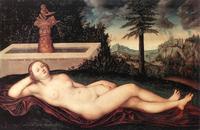
Reclining River Nymph at the Fountain
Lucas Cranach the Elder
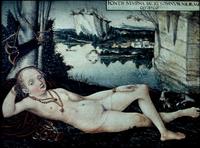
Water Nymph Resting
Lucas Cranach the Elder
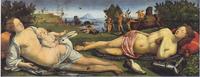
Venus, Mars, and Cupid
Piero di Cosimo
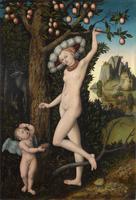
Cupid complaining to Venus.
Lucas Cranach the Elder
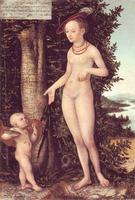
Venus and Cupid
Lucas Cranach the Elder
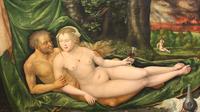
Lot and his daughter
Albrecht Altdorfer
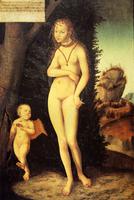
Venus with Cupid the Honey Thief
Lucas Cranach the Elder
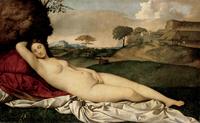
The Sleeping Venus
Giorgione
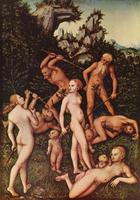
The Silver Age
Lucas Cranach the Elder
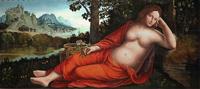
Rea Silvia
Francesco Melzi
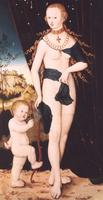
Venus and Cupid
Lucas Cranach the Elder
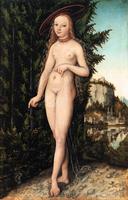
Venus standing in a landscape
Lucas Cranach the Elder
Harmony or The Three Graces
Hans Baldung
Bacchante
Kuzma Petrov-Vodkin
Venus and Mars
Sandro Botticelli
Venus and Cupid
Palma Vecchio
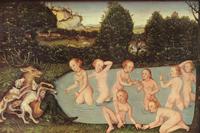
Diana and Actaeon
Lucas Cranach the Elder
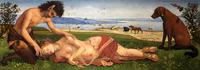
The Death of Procris
Piero di Cosimo