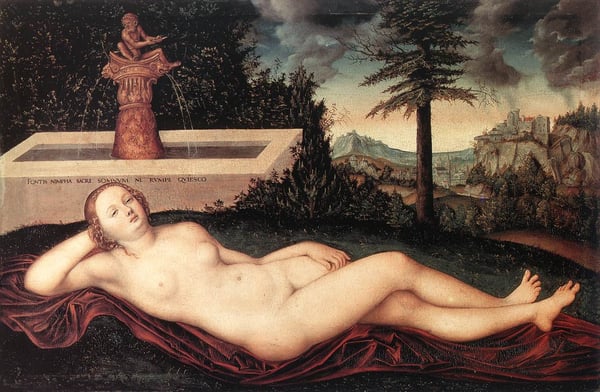
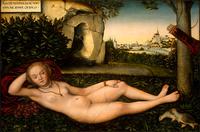
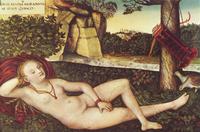
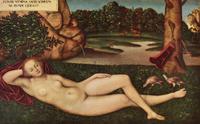
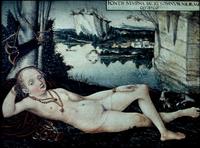
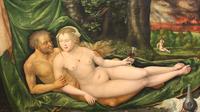
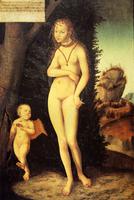
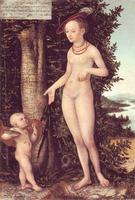
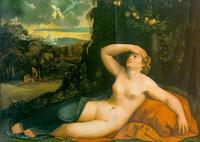
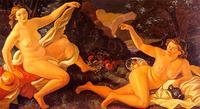
The "Reclining River Nymph at the Fountain" by Lucas Cranach the Elder is a seminal work of the Northern Renaissance, showcasing the era’s synthesis of classical mythology with a distinctly Germanic aesthetic. Cranach’s treatment of the nude figure—elongated, pale, and poised in a sinuous contrapposto—epitomizes his signature style, which merges medieval courtly elegance with the humanist revival of antique themes. The painting’s significance lies in its dual function as both a sensuous depiction and a moral allegory: inscriptions on similar works by Cranach often caution the viewer against disturbing the nymph’s slumber, a witty nod to the tension between desire and virtue typical of Northern Renaissance humanism. Moreover, the detailed rendering of the landscape—lush foliage, a rocky fountain, and atmospheric depth—demonstrates the Northern obsession with naturalistic observation, while the inclusion of classical motifs (the fountain, the reclining pose) reflects the period’s intellectual ambition to reconcile pagan mythology with Christian morality. This work thus stands as a refined example of how Cranach and his contemporaries transformed mythological subjects into vehicles for exploring beauty, temptation, and the fleeting nature of life.