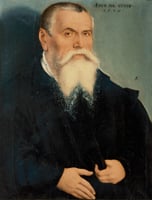
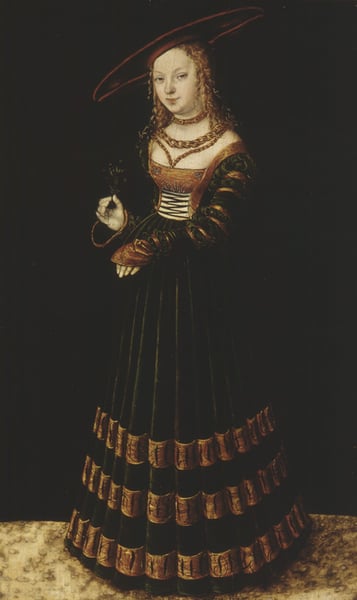
Экспертный разбор работы «The Princess» художника Lucas Cranach the Elder
Стиль: Northern Renaissance · Жанр: portrait
Expert Analysis: "The Princess" by Lucas Cranach the Elder
Lucas Cranach the Elder stands as one of the most distinctive voices of the Northern Renaissance, and his portrait The Princess is a quintessential example of the period's evolving approach to aristocratic representation. Painted in his characteristically elegant, almost Mannerist-influenced style, the work reflects the Northern Renaissance's shift from purely religious imagery toward secular portraiture that celebrated individual status, virtue, and courtly ideals.
Significance within the Northern Renaissance
Cranach’s portraits are notable for their meticulous detail, smooth modeling, and subtle symbolism—hallmarks of the Northern Renaissance’s emphasis on empirical observation and symbolic content. In The Princess, the sitter’s elongated proportions, delicate features, and refined posture evoke an idealized courtly beauty, while the rich, layered textiles and precise rendering of jewelry or ornamentation demonstrate the artist’s mastery of surface texture and materiality, a Northern Renaissance specialty.
Cranach’s Distinctive Approach
Unlike the more naturalistic portraiture of contemporaries like Albrecht Dürer, Cranach often infused his female subjects with a slightly stylized, almost archetypal grace—a combination of Gothic lyricism and Renaissance humanism. This painting likely served both as a record of the sitter’s physical appearance and as an emblem of her noble lineage and moral virtues. The clear, luminous skin, elaborate costume, and serene expression are typical of Cranach’s workshop’s output, which frequently portrayed Saxon court women as paragons of chastity and refinement.
Historical and Stylistic Context
Produced during a period of religious and political upheaval (the Reformation), Cranach’s portraits provided a stable, dignified image of princely authority. The Princess would have reinforced the social hierarchy and the sitter’s place within it, aligning with the Northern Renaissance’s broader interest in documented realism intertwined with idealized courtly codes. The work’s significance lies in its fusion of precise observation with a deliberate aesthetic elegance—a balance that defined Cranach’s legacy and influenced later German portrait traditions.
In sum, The Princess is not merely a likeness but a carefully constructed statement of identity, power, and beauty, emblematic of Cranach the Elder’s pivotal role in shaping Northern Renaissance portraiture.
Museum / Gallery
Визуально похожие
20 работ с близкой композицией и палитрой
Magdalene von Sachsen
Lucas Cranach the Elder
Salome with the Head of St. John the Baptist
Lucas Cranach the Elder
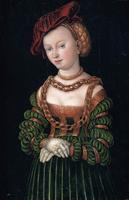
Portrait of a Young Woman
Lucas Cranach the Elder
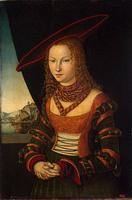
Portrait of a Woman
Lucas Cranach the Elder
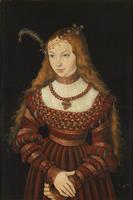
Princess Sibylle of Cleve
Lucas Cranach the Elder
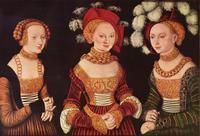
Three princesses of Saxony, Sibylla, Emilia and Sidonia, daughters of Duke Heinrich of Frommen
Lucas Cranach the Elder
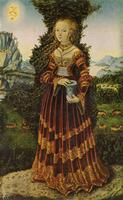
Portrait of a Saxon noblewoman as Mary Magdalene
Lucas Cranach the Elder
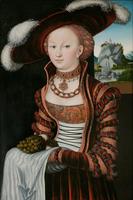
Portrait of a Young Woman Holding Grapes and Apples
Lucas Cranach the Elder
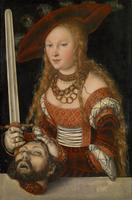
Judith with the head of Holofernes
Lucas Cranach the Elder
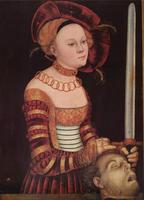
Judith
Lucas Cranach the Elder
Portrait of a Lady
Hans Baldung
Judith
Lucas Cranach the Elder
Young Lady holding a Finger Fern
Lucas Cranach the Elder
Portrait of a Young Woman
Lucas Cranach the Elder
Salome
Lucas Cranach the Elder
Judith Victorious
Lucas Cranach the Elder
Queen Elizabeth I
Nicholas Hilliard
Jane Seymour
Hans Holbein the Younger
St. Catherine and St. Barbara
Lucas Cranach the Elder
Portrait of Sibylla (or Sybilla) von Freyberg (born Gossenbrot)
Bernhard Strigel