Expert analysis of Lucas Cranach the Elder’s Portrait of a Saxon noblewoman as Mary Magdalene
Style: Northern Renaissance · Genre: portrait
Expert Analysis: "Portrait of a Saxon Noblewoman as Mary Magdalene" by Lucas Cranach the Elder
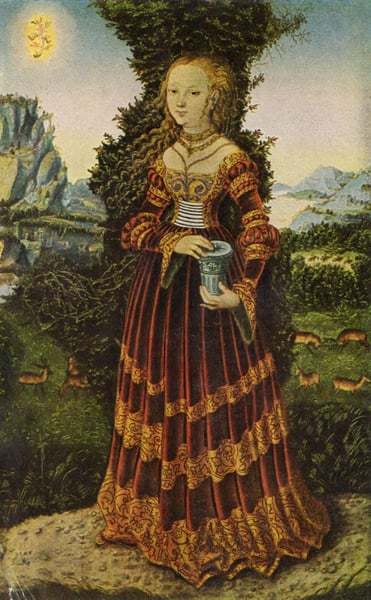
This work is a striking example of the Northern Renaissance’s distinctive fusion of portraiture with religious allegory—a hallmark of Lucas Cranach the Elder’s practice as court painter to the Saxon electors. By depicting a noblewoman in the guise of Mary Magdalene, Cranach simultaneously elevates the sitter’s social status and imbues her image with spiritual significance.
Genre and Style Significance
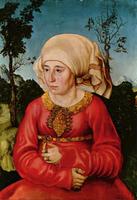
As a portrait, the work functions as a record of individual identity and courtly refinement. However, its genre is hybridized: the sitter is not merely posed as herself but performs a biblical role, a common Northern Renaissance device that allowed patrons to project piety, learning, and virtue. Cranach’s style—characterized by sinuous outlines, elegant elongation, and meticulous attention to luxurious fabrics and jewelry—reflects the courtly aesthetic of the Saxon court. The Magdalene’s traditional attributes (the ointment jar, flowing hair) are integrated seamlessly into a sumptuous contemporary dress, anchoring the religious narrative in the sitter’s own world.
Significance within the Northern Renaissance
The painting exemplifies the era’s interest in the intersection of the sacred and the secular. During the Reformation, Cranach’s workshop frequently produced such “disguised portraits” to articulate Lutheran ideals of inner faith and grace, while also celebrating earthly beauty and status. Here, the noblewoman’s identification with Mary Magdalene—a figure of repentance and devotion—suggests a personal statement of religious humility, even as her opulent attire affirms her worldly rank. Cranach’s crisp, linear modeling and cool, luminous color palette further define the Northern Renaissance preference for precise detail and symbolic clarity over the atmospheric softness of Italian counterparts.
Key Takeaway
This artwork is significant as a sophisticated blend of individual likeness and biblical narrative, showcasing Cranach’s ability to serve both courtly patronage and religious reform. It stands as a refined example of how Northern Renaissance portraiture could negotiate identity, faith, and power through visual allegory.
Museum / Gallery
Visually similar
20 works with related composition and palette
The Princess
Lucas Cranach the Elder
Salome with the Head of St. John the Baptist
Lucas Cranach the Elder
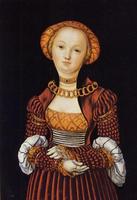
Magdalene von Sachsen
Lucas Cranach the Elder
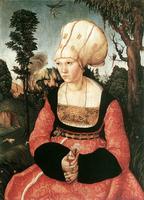
Anna Cuspinian
Lucas Cranach the Elder
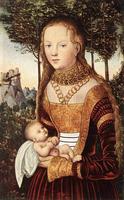
Young mother with child
Lucas Cranach the Elder
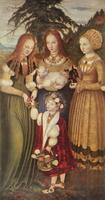
Saints Dorothea, Agnes and Kunigunde
Lucas Cranach the Elder
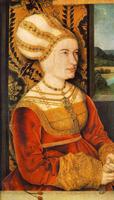
Portrait of Sibylla (or Sybilla) von Freyberg (born Gossenbrot)
Bernhard Strigel
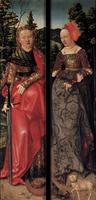
Three Kings Altarpiece (closed)
Hans Baldung
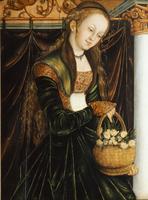
St. Dorothea
Lucas Cranach the Elder
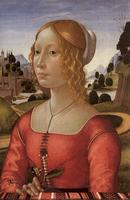
Portrait of a Lady
Domenico Ghirlandaio
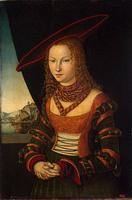
Portrait of a Woman
Lucas Cranach the Elder
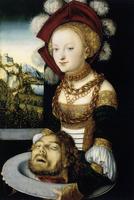
Salome
Lucas Cranach the Elder
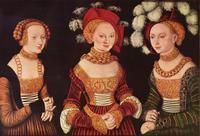
Three princesses of Saxony, Sibylla, Emilia and Sidonia, daughters of Duke Heinrich of Frommen
Lucas Cranach the Elder
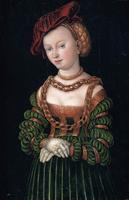
Portrait of a Young Woman
Lucas Cranach the Elder
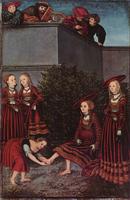
David and Bathsheba
Lucas Cranach the Elder
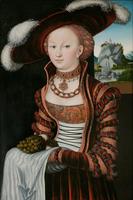
Portrait of a Young Woman Holding Grapes and Apples
Lucas Cranach the Elder
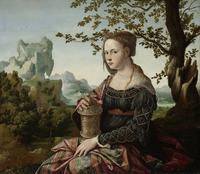
Mary Magdalene
Jan van Scorel
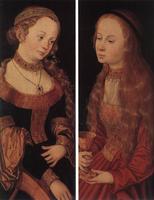
St. Catherine and St. Barbara
Lucas Cranach the Elder
Wife of Dr. Johann Stephan Reuss
Lucas Cranach the Elder
Portrait of Margaret of Austria (Portrait of a Young Princess)
Jean Hey