Analyse experte de Venus and Cupid de Lucas Cranach the Elder
Style : Northern Renaissance · Genre : mythological painting
Expert Analysis of "Venus and Cupid" by Lucas Cranach the Elder
Style & Period Context
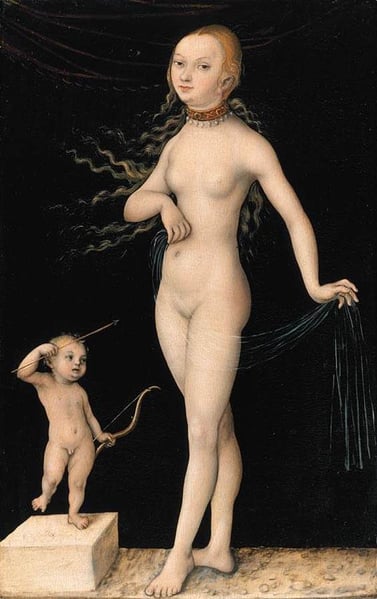
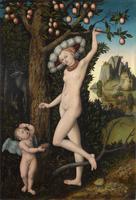
Painted during the Northern Renaissance (c. 1520s–1530s), Cranach’s Venus and Cupid exemplifies the distinctive fusion of German Gothic precision with the burgeoning interest in classical mythology that swept across Europe. Unlike the idealized, proportion-driven nudes of Italian contemporaries (e.g., Botticelli or Titian), Cranach’s Venus is unmistakably Northern: slender, elongated, with a small head, high forehead, and a sinuous, almost mannerist silhouette. The smooth, polished finish and meticulous attention to hair, jewels, and sheer drapery reflect the technical virtuosity of Cranach’s workshop, which produced multiple versions of this theme for humanist patrons.
Iconography & Composition
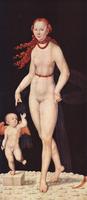
Venus stands as the goddess of love, holding a diaphanous veil that barely conceals her body—a deliberate play between modesty and allure. Beside her, the winged infant Cupid draws an arrow, his mischievous gaze engaging the viewer. Cranach infuses the scene with moral ambiguity: Cupid’s arrow threatens both love and folly, a common Northern Renaissance trope that tempers pagan pleasure with Christian caution. The dark, neutral background focuses attention on the pale figures, while the thin, almost translucent paint layers create a cool, gemlike luminosity.
Significance within the Northern Renaissance
- Mythological Innovation: Cranach adapted classical subjects for a German audience, stripping away idealization in favor of a more earthly, sometimes ironic sensuality. His Venus is not a distant Olympian but a courtly, almost contemporary figure—her jewelry and hairstyle echo fashion of the 16th‑century Saxon court.
- Moral Underpinning: The painting subtly warns against the perils of love and desire, aligning with Reformation-era anxieties about worldly temptation. Cranach, a friend of Martin Luther, frequently embedded such moralizing messages into ostensibly pagan scenes.
- Technical Mastery: The crisp outlines, smooth modeling, and restrained palette demonstrate Cranach’s command of the oil medium and his departure from the more linear, Gothic style of earlier German art. This work helped define the “Cranach type” of the female nude—an instantly recognizable formula that influenced Northern Mannerism.
Conclusion
Venus and Cupid stands as a quintessential Northern Renaissance reinterpretation of classical mythology, where elegance and eroticism coexist with moral reflection. Cranach’s ability to merge Italianate themes with a distinctly German sensibility—precise, cool, and intellectually layered—makes this painting a key example of the period’s cultural cross‑currents and the enduring appeal of the female nude in Northern art.
Museum / Gallery
Visuellement similaire
20 œuvres à la composition et à la palette proches
Venus and Cupid
Lucas Cranach the Elder
Venus and Cupid
Lucas Cranach the Elder
Venus and Cupid
Lucas Cranach the Elder
Venus and Cupid
Lucas van Leyden
Venus and Cupid
Lucas Cranach the Elder
Venus and Cupid
Lucas Cranach the Elder
Lucretia
Lucas Cranach the Elder
The Three Graces
Lucas Cranach the Elder
Venus and Cupid with a Honeycomb
Lucas Cranach the Elder
Venus with Cupid the Honey Thief
Lucas Cranach the Elder
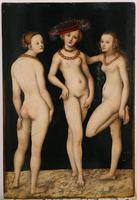
The Three Graces
Lucas Cranach the Elder
Eve (right panel)
Albrecht Durer
Prudence
Hans Baldung
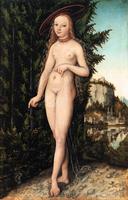
Venus standing in a landscape
Lucas Cranach the Elder
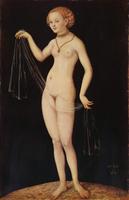
Venus
Lucas Cranach the Elder
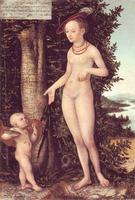
Venus and Cupid
Lucas Cranach the Elder
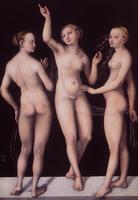
The Three Graces
Lucas Cranach the Elder
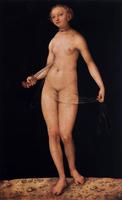
Lucretia
Lucas Cranach the Elder
Cupid complaining to Venus.
Lucas Cranach the Elder
Adam and Eve
Lucas Cranach the Elder