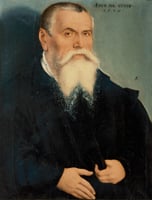
Expert analysis of Lucas Cranach the Elder’s Lucretia
Style: Northern Renaissance · Genre: portrait
Expert Art Historical Analysis: Lucretia by Lucas Cranach the Elder
Style & Period: Northern Renaissance
Genre: Portrait (with historical/moralizing narrative)
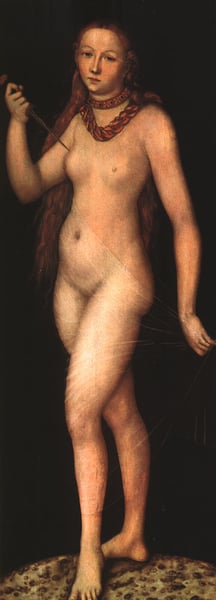
Lucas Cranach the Elder’s Lucretia is a striking example of how Northern Renaissance artists infused classical moral narratives with contemporary portraiture and Protestant Reformation sensibilities. Though the artwork is categorized as a portrait—often showing a single figure in close-up—it simultaneously operates as a history painting, depicting the Roman noblewoman Lucretia at the moment before her suicide. This duality is central to its significance.
Cranach, court painter to the Electors of Saxony and a close friend of Martin Luther, frequently revisited this subject. His Lucretia is not merely a passive victim of ancient story; she is rendered with the poised, elongated elegance characteristic of the Cranach workshop style—slender proportions, pale skin, and a knowing, almost theatrical expression. Her garments are sumptuous, with intricate folds and jewel-toned fabrics that showcase the Northern Renaissance mastery of texture and detail. Yet the dagger she presses against her throat is stark and unadorned, creating a powerful tension between sensuous beauty and tragic virtue.
What makes this work significant within its period:
-
Moralizing Function in a Protestant Context: In Cranach’s hands, Lucretia becomes a model of chastity and personal integrity, a theme that resonated with Reformation values emphasizing individual conscience over institutional authority. The painting was likely intended as a moral exemplum—a warning against lust and a celebration of virtuous self-sacrifice.
-
Blending of Genres: By presenting a classical heroine in a format resembling a contemporary portrait—direct gaze, half-length composition—Cranach collapses temporal distance. The viewer is meant to see Lucretia not as a remote ancient figure, but as an ideal woman whose virtue is immediate and personal. This innovation influenced later Northern depictions of historical and biblical women.
-
Eroticism vs. Didacticism: Cranach’s Lucretias are notorious for their ambiguous erotic appeal. The bare breast, the soft gaze, the luxurious accessories—these elements risk titillating the viewer even as they preach virtue. This tension is a hallmark of Cranach’s art, reflecting the Northern Renaissance’s fascination with the interplay of moral instruction and visual pleasure.
-
Symbolic Economy: Every detail is loaded with meaning: the dagger signifies resolution and tragedy; the elaborate hat and chain denote her noble status; the subdued background focuses all attention on her internal drama. Cranach achieves a concise, powerful narrative without the clutter of multiple figures or landscape, demonstrating the Renaissance ideal of ut pictura poesis (as painting, so poetry).
In sum, Lucretia by Lucas Cranach the Elder is significant not only as a technical tour de force of the Cranach workshop but as a pivotal work that marries Northern Renaissance realism with Reformation morality, while pushing the boundaries of genre to create a hauntingly modern portrait of inner conflict.
Museum / Gallery
Visually similar
20 works with related composition and palette
Lucretia
Lucas Cranach the Elder
Eve (right panel)
Albrecht Durer
Venus and Cupid
Lucas Cranach the Elder
Prudence
Hans Baldung
Venus standing in a landscape
Lucas Cranach the Elder
Venus and Cupid
Lucas Cranach the Elder
Venus and Cupid with a Honeycomb
Lucas Cranach the Elder
Venus and Cupid
Lucas Cranach the Elder
The Three Graces
Lucas Cranach the Elder
Venus
Lucas Cranach the Elder
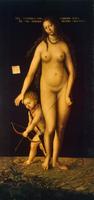
Venus and Cupid
Lucas Cranach the Elder
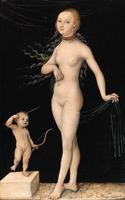
Venus and Cupid
Lucas Cranach the Elder
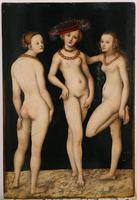
The Three Graces
Lucas Cranach the Elder
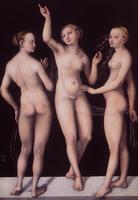
The Three Graces
Lucas Cranach the Elder
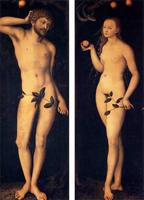
Adam and Eve
Lucas Cranach the Elder
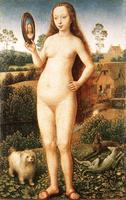
Vanity, central panel from the Triptych of Earthly Vanity and Divine Salvation
Hans Memling
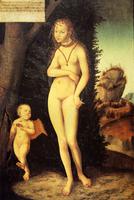
Venus with Cupid the Honey Thief
Lucas Cranach the Elder
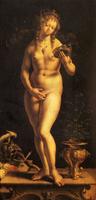
Venus and the Mirror
Mabuse
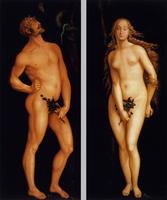
Adam and Eve
Hans Baldung
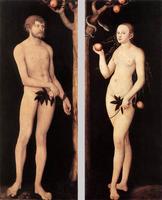
Adam and Eve
Lucas Cranach the Elder