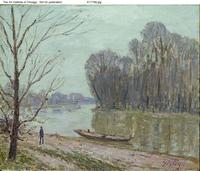
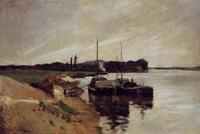
Expert Analysis of "The Seine at La Grande Jatte in the Spring" by Georges Seurat
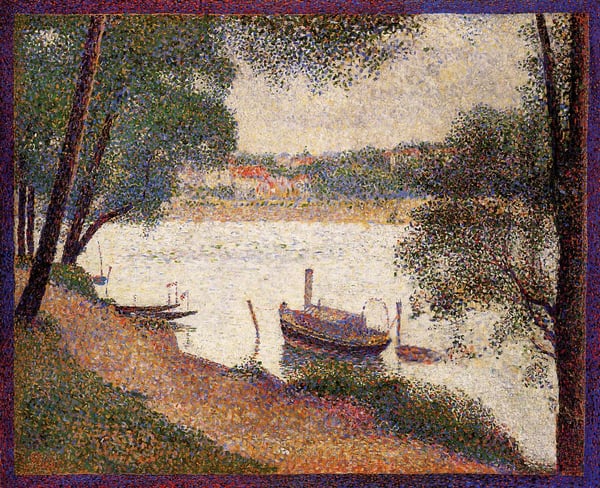
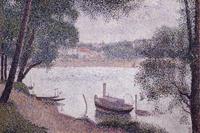
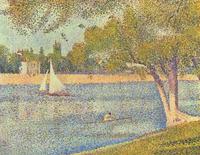
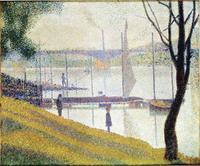
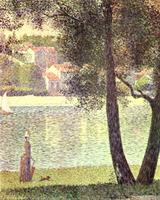
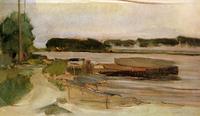
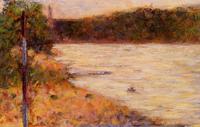
This landscape exemplifies Georges Seurat's revolutionary technique of Pointillism, a cornerstone of Neo-Impressionism. By applying tiny, distinct dots of pure color side by side, Seurat aimed to achieve optical mixing—where the viewer's eye blends the hues rather than the artist mixing them on a palette. This method reflects a scientific approach to color theory, breaking from the spontaneous, intuitive brushwork of earlier Impressionism.
The work's significance lies in its systematic application of these principles to a tranquil riverside scene. The spring setting allows Seurat to explore luminosity and atmosphere through carefully calibrated contrasts of warm and cool tones, demonstrating how Pointillism could render light and air with unprecedented precision. As a precursor to his monumental A Sunday on La Grande Jatte, this painting establishes the foundation for Neo-Impressionism's legacy: a deliberate, structured harmony that elevated landscape painting into a study of perception itself.