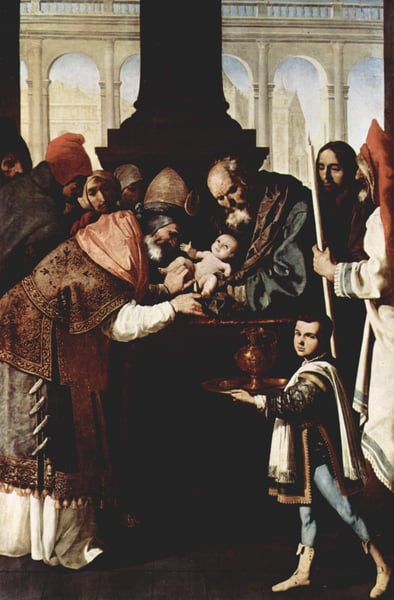
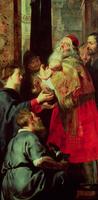
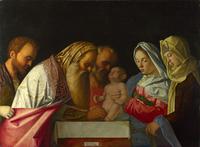
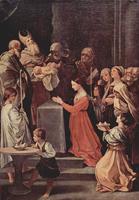
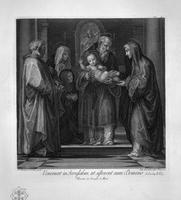
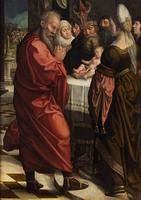
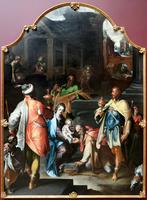
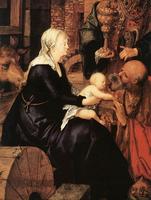
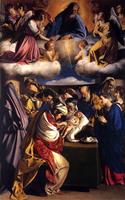
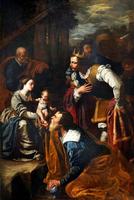
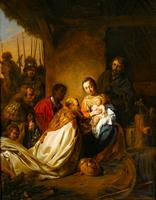
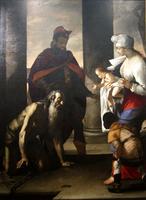
Based solely on the structured facts provided, the significance of Francisco de Zurbarán’s Monastery of Nuestra Señora de la Defensión at Jerez de la Frontera, Scene: The Circumcision lies in its embodiment of the Baroque style within the religious painting genre. As a work commissioned for a specific monastic context, it reflects the Baroque period’s emphasis on dramatic, emotionally charged devotional imagery intended to inspire piety and reinforce Counter-Reformation doctrine. The subject—a rarely depicted biblical event—is executed in a style that prioritizes intense chiaroscuro, naturalistic detail, and a sense of sacred immediacy, all hallmarks of Spanish Baroque religious art. Thus, the painting is significant as a representative example of how Baroque aesthetics were employed to serve a specific liturgical and monastic setting, merging theological narrative with the stylistic dynamism of its era.