
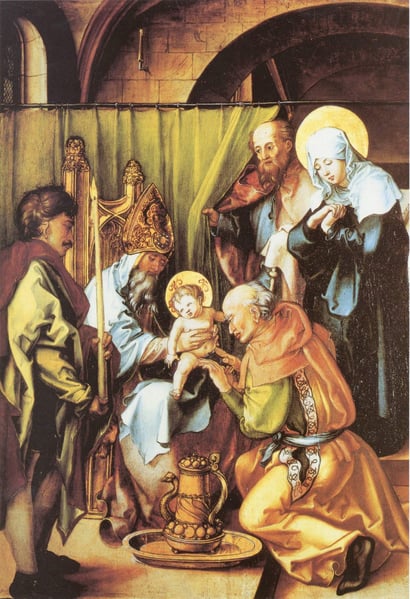
Analisi esperta di Circumcision di Albrecht Durer
Stile: Northern Renaissance · Genere: religious painting
Expert Analysis: "Circumcision" by Albrecht Dürer
Albrecht Dürer’s Circumcision (circa 1504–1505, likely a woodcut or engraving from his series on the Life of the Virgin) is a landmark of Northern Renaissance religious painting. Executed with extraordinary precision, it exemplifies Dürer’s unrivaled ability to merge the minute observational detail of Northern European art with the compositional harmony and classical idealization he absorbed during his Italian journeys.
Stylistic Significance
Dürer’s treatment of the biblical scene—the ritual circumcision of the infant Jesus in the Temple—reflects the Northern Renaissance’s characteristic devotion to tangible reality. Every surface is rendered with almost forensic attention: the folds of the Virgin’s robes, the weathered faces of the priests, the gleam of the metal instruments, and the tactile texture of the wooden altar. This hyperrealism serves a devotional purpose, making the sacred event feel immediate and physically present. At the same time, Dürer organizes the crowded composition with a balanced, almost sculptural clarity—a nod to Italian Renaissance principles he encountered while studying in Venice. The figures interact in a controlled space, their gestures and gazes directing the viewer’s focus to the central act of the covenant.
Iconographic Depth
As a religious painting, Circumcision is rich with symbolic resonance. The scene itself marks Christ’s first shedding of blood, prefiguring the Passion. Dürer subtly emphasizes this through the juxtaposition of the infant’s vulnerability and the solemn, ritualized setting. The inclusion of a candle or lamp (common in Northern depictions) alludes to the Light of the World, while the aged Simeon—often identified as the priest performing the rite—serves as a link to the later Presentation in the Temple. Dürer’s meticulous rendering of the Temple interior, with its arches and candelabras, also reflects contemporary church architecture, grounding the sacred narrative in a space familiar to 16th-century viewers.
Historical Significance
Within the Northern Renaissance, Dürer’s Circumcision stands as a masterclass in the fusion of medium and message. His expert use of engraving or woodcut (typical of his graphic work) allows for both fine linear detail and dramatic chiaroscuro, demonstrating the expressive potential of printmaking—a medium Dürer elevated to fine art. Moreover, the work reflects the era’s theological shift toward personal, intimate devotion: the viewer is invited into the hushed, reverent moment, rather than merely observing a distant tableau.
In sum, Circumcision is significant not only for its technical brilliance but for how it embodies the Northern Renaissance’s core achievement: the seamless union of spiritual meaning with an almost scientific observation of the natural world. Dürer’s ability to render the divine through the human, the eternal through the momentary, marks this piece as a cornerstone of early 16th-century religious art.
Museum / Gallery
Visivamente simili
20 opere con composizione e palette affini
Adoration of the Magi
Quentin Matsys
Monastery of Nuestra Señora de la Defensión at Jerez de la Frontera, Scene: The Circumcision
Francisco de Zurbaran
The Circumcision
Giovanni Bellini
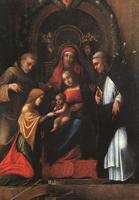
The Mystic Marriage of St. Catherine
Correggio
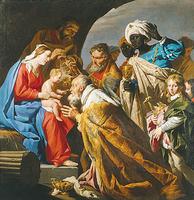
The Adoration of the Magi
Matthias Stom
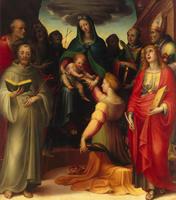
The Mystical Marriage of Saint Catherine
Domenico Beccafumi
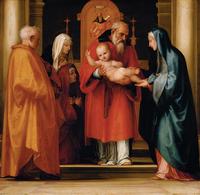
The Scene of Christ in the Temple
Fra Bartolomeo
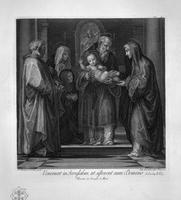
Modesty and Vanity
Giovanni Battista Piranesi
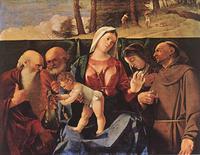
Virgin and Child with Saints Jerome, Peter, Clare and Francis
Lorenzo Lotto
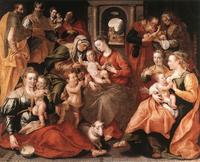
The Family of St Anne
Maarten de Vos
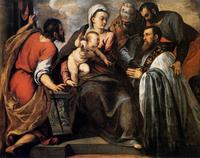
Virgin and Child with Saints
Palma il Giovane
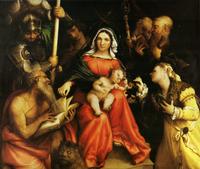
Mystic marriage of Saint Catherine of Alexandria and Saint Catherine of Siena
Lorenzo Lotto
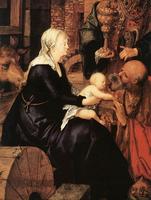
Adoration(fragment)
Albrecht Durer
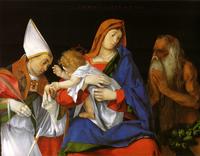
Madonna with a Bishop and St. Onuphrius
Lorenzo Lotto
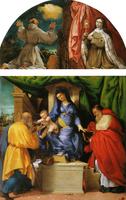
The Madonna of the Roses
Lorenzo Lotto
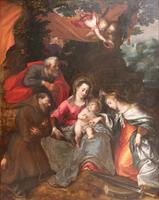
The Mystical Marriage of Saint Catherine
Otto van Veen
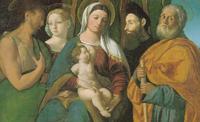
Sacra Conversazione
Dosso Dossi
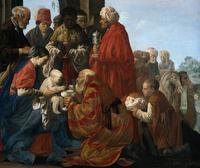
The Adoration of the Magi
Hendrick Terbrugghen
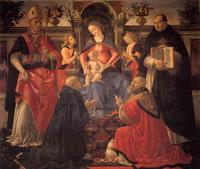
Madonna and Child enthroned with St. Dionysius, Aeropagita, Domenic, Clement and Thomas Aquinas
Domenico Ghirlandaio
Heilige Familie Mit Heiligen Und Stiftern
Sebastiano del Piombo