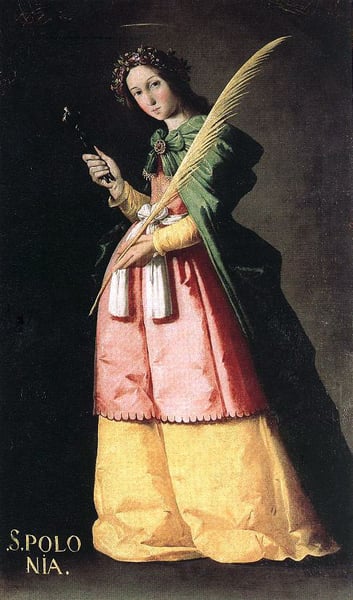
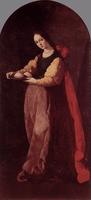
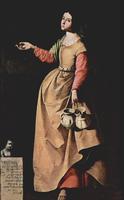
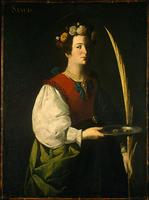
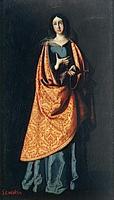
Francisco de Zurbarán’s St. Apollonia is a masterful example of Spanish Baroque religious painting, significant for its intense devotional clarity and restrained dramatic power. The work epitomizes the period’s commitment to naturalism and emotional directness, using stark chiaroscuro to isolate the saint against a dark background—a hallmark of tenebrism that heightens the spiritual gravity. Zurbarán focuses on St. Apollonia’s attribute (the pincers and tooth, referencing her martyrdom) with meticulous realism, transforming a gruesome detail into an object of quiet, solemn contemplation. This approach reflects the Counter-Reformation’s emphasis on accessible, emotionally resonant imagery designed to inspire piety. The composition’s simplicity and the saint’s downward gaze prioritize inner reflection over theatrical action, marking Zurbarán’s unique contribution to Baroque religious art: a fusion of earthly verisimilitude with transcendent stillness.